Symbolic Wheat
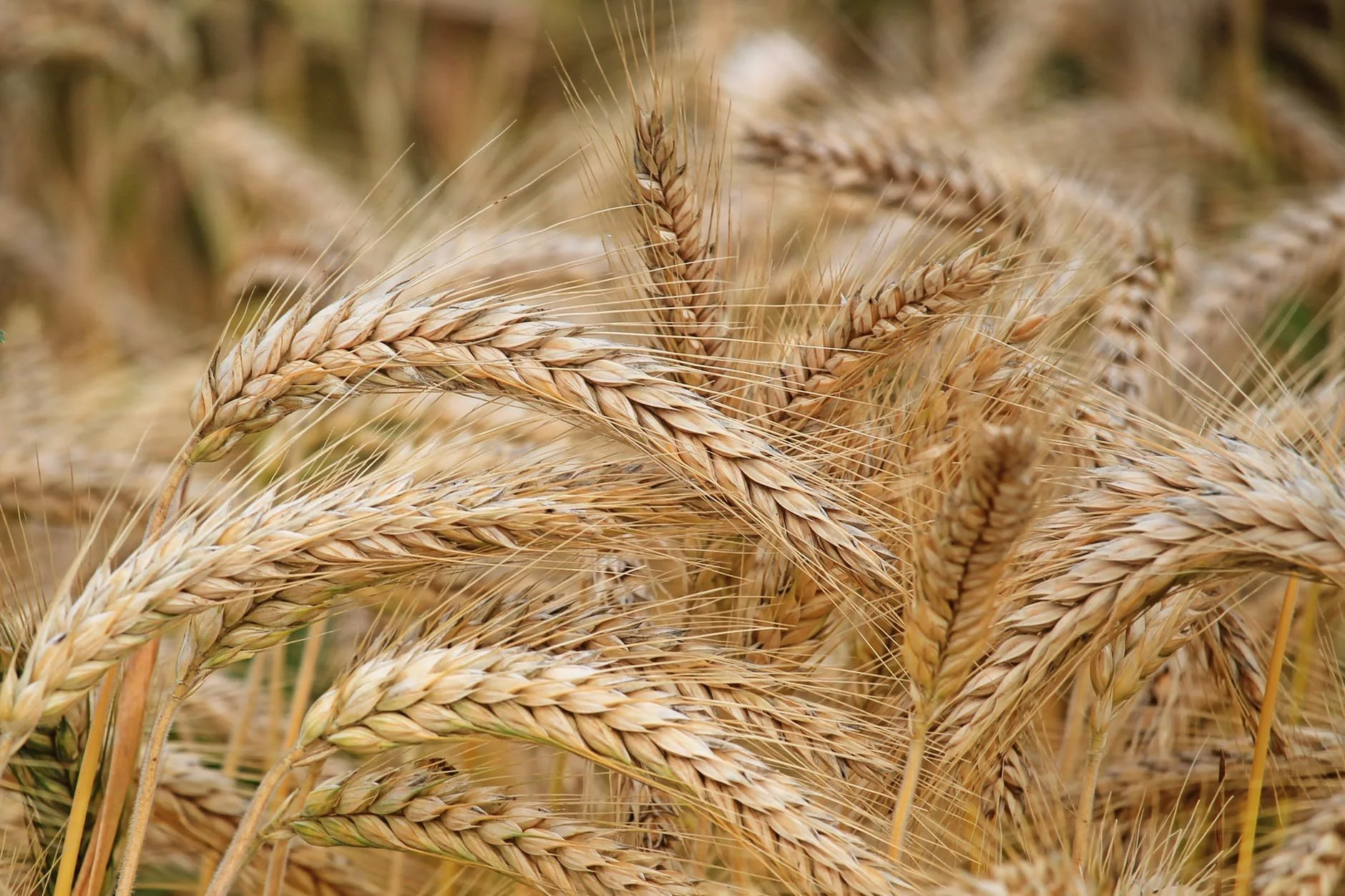
Photo by Pixabay on Pexels.com
The Mediterranean Sea has been the epicenter of the civilized world for thousands of years. One of those ancient and influential societies, still providing inspiration for us today, is Greece. Classical Greek culture (philosophy, arts, architecture, music, etc.) had a powerful effect on the subsequent Roman Empire, which as we know spread and evolved into and across Europe and the Americas. Ancient or Classical Greece is therefore generally considered to be the formative ethos of modern Western culture.
Greek and Roman architecture (as well as Egyptian) are the ancient source for the design language we now call “Classical”. Of course thousands of years in the making is overwhelming to discuss in a blog article. In short – with Classical Architecture, the systems, geometries, proportions, and symbolism all begin with the study and appreciation of nature. It is this “nature”, and the iconography or symbolic representation thereof that is the focus of this piece. And despite our modern generation’s lack of understanding and admiration of American history, the United States readily displays its connection to nature and farming in multiple ways every day.
For instance, consider our US monetary icons – the Lincoln wheat penny, made 1909-1958, is considered to be the most collected coin in the world. It was designed by Victor D. Brenner under the direction of President Theodore Roosevelt. Lincoln was chosen as the subject for the penny to commemorate the 100th anniversary of his birth in 1809.
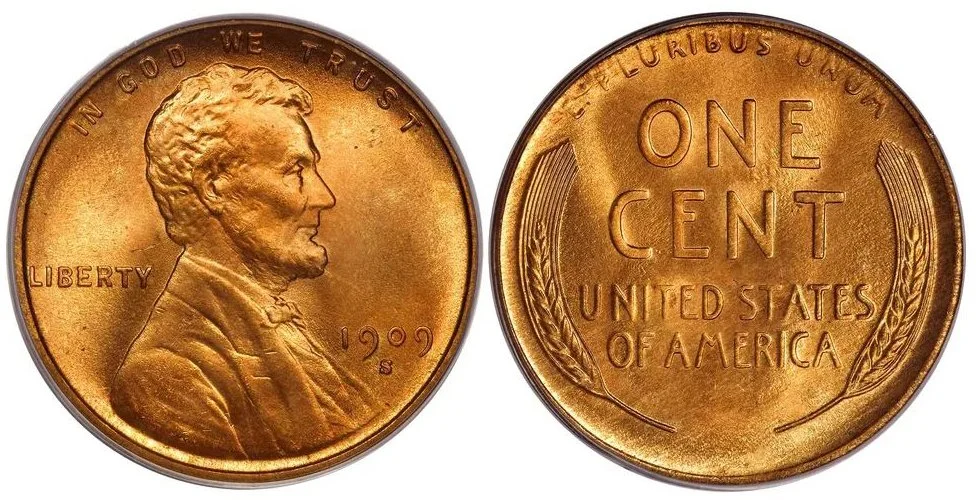
Lincoln wheat penny, or “Wheatie” via Heritage Auction Gallery
It was certainly appropriate to place the images of a wheat sheaf on the penny. After all, agriculture was the foundation of the Ancient Greek economy, just as it was for the first 200 years in the United States. Family farming was a basic part of life until recent decades brought us corporate farms and neighborhood grocery stores. It was normal and meaningful to incorporate forms of nature and replicate its beauty within our built environments. Likewise, if only for necessity, buildings would be nothing more than basic structures simply to protect inhabitants from weather and predators, but the ancient Mediterranean civilizations searched for more. It was fitting that much of the Greek’s architectural adornments or decorations were symbolic of familiar animals or plants such as olives, grapes, beans, onion, garlic, and in particular barley or wheat.
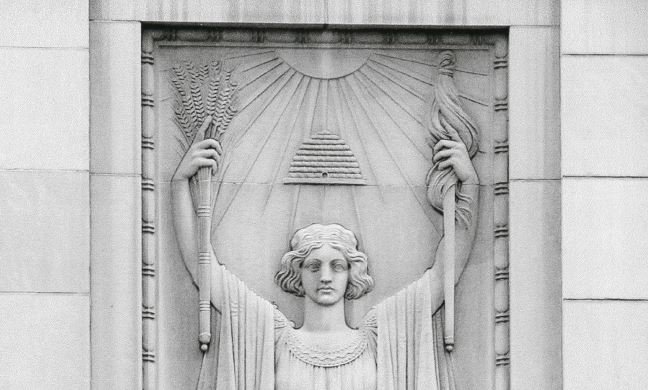
Federal Reserve Bank of Kansas City, built 1921, features a female figure symbolic of Industry with her hand held high. . . right hand holds a sheaf of wheat. National Archives
Wheat is traditionally recognized as representative for love and charity, and is often signified as such throughout the Bible, making wheat one of the more prolific symbols in neoclassical art and architecture. A sheaf is a bundle in which cereal plants are bound after reaping so they are convenient for threshing out the grain. A sheaf of wheat represents harvest and fertility. Grains of wheat are often symbolic of the cycle of seasons and the cycle of life. Wheat in a basket is a symbol of self-sacrifice. Wheat being sown is used as a symbol of remorse and modesty. In the Christian faith, the “Bread of Life” (Jesus) is symbolized with a bundled wheat motif – it’s the imagery of the divine harvest eventually being reaped, denoting the life cut and the renewal (or resurrection) of the soul.
Descended from the ancient Greek prototypes, American Classicism continued their architectural symbolism into the New World. In particular, the pioneer settlement of the Mississippi Territory in the 18th and 19th centuries was built around the same agrarian/agricultural economy of the Greeks. Therefore the same architectural decorations were “revived” and reused … becoming what historians now call Greek Revival. Fittingly to a farming social order and economy, the Sheaf of Wheat imagery represented the gifts of God, the fullness and bounty of the Lord.
“He grants peace to your borders and satisfies you with the finest of wheat.”

The guard railing or balustrade detail above depicts the front portico of “Choctaw Hall” in Natchez, Mississippi. Constructed in 1836 for Joseph Neibert, Choctaw Hall is a transitional Natchez mansion containing the general Federal style form established by earlier mansions while blending Greek Revival details, which were popular around the country at that time. Choctaw Hall possesses large Ionic columns at its entry portico and entrance, as well the aforementioned “bundled sheaf-of-wheat” motif utilized in its balustrade.
In conclusion, or perhaps as lead into another blog post, it is interesting to consider rye vs. wheat. Rye is a cereal grain and a close relative to wheat. It’s a sturdy plant that grows well in cold climates and is tolerant of frost and drought, making it possible to grow rye in locations where wheat might not survive. Of particular interest to our design firm, rye has become popular in the distilling of whiskey, vodka, and certain other popular libations. Our architectural firm is working now on an exciting new distillery facility that will feature custom blends of aged rye whiskey. Perhaps we’ll be able to display symbolism in our ornament that features a bundled “sheaf of rye” instead? More to show & tell soon!
References:
D. Tracy Ward, Architect
Originally prepared 2015 – Reedited 2018 – DTW’s Blog #0028
Our Original Posts, including images when applicable, are copyrighted © 1993-2018 by D. Tracy Ward and Benchmark Design, PC. God bless America! Treasure Liberty always and pass it on! “Architecture aims at Eternity. Architecture has its political Use; publick Buildings being the Ornament of a Country; it establishes a Nation, draws People and Commerce; makes the People love their native Country, which Passion is the Original of all great Actions in a Common-wealth.” [CHRISTOPHER WREN, Parentalia]