Gunston Hall - Historic Home of George Mason
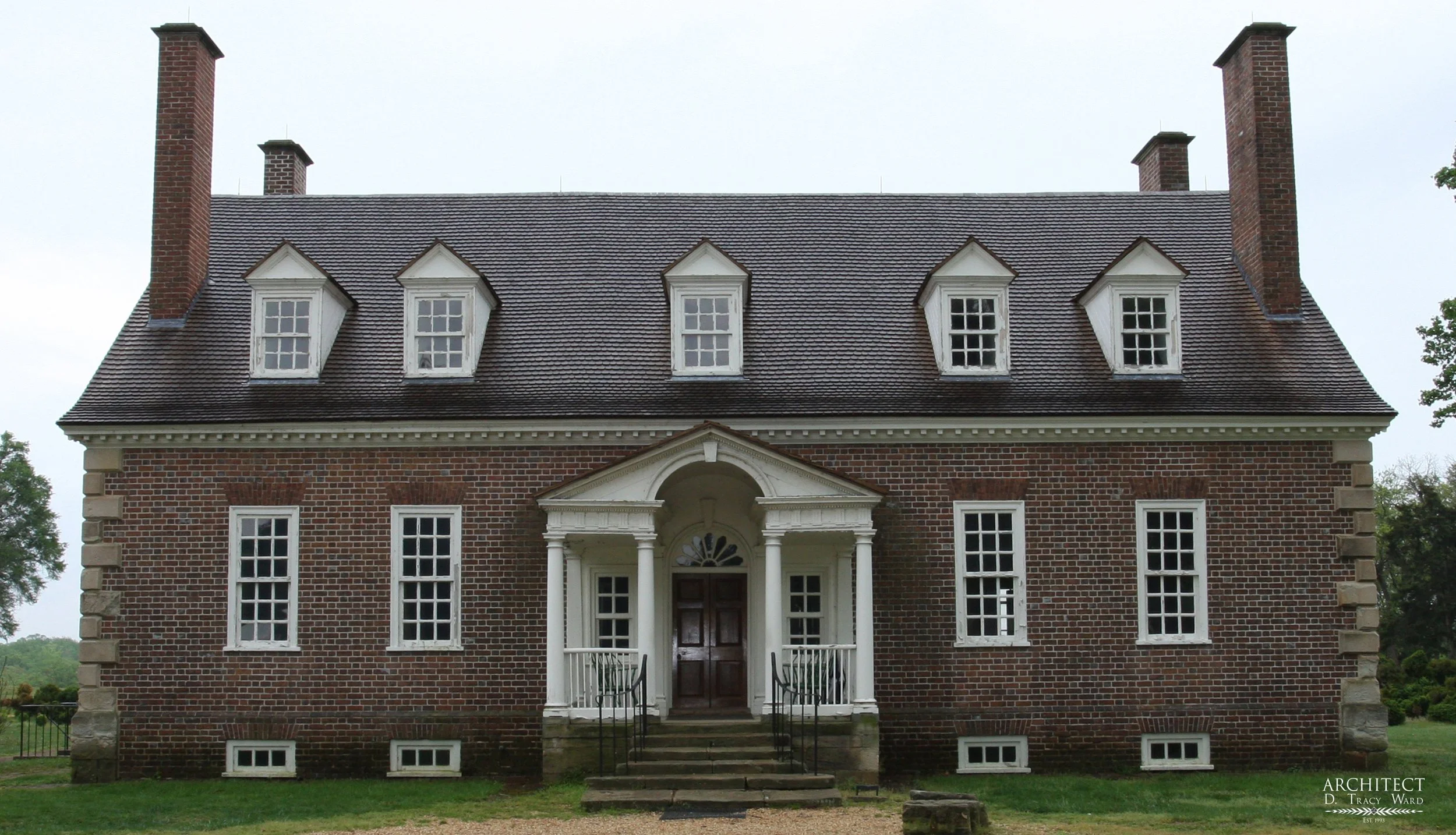
Image courtesy of D. Tracy Ward 2016
“That all men are by nature equally free and independent, and have certain inherent rights . . . ”
The fourth George Mason (1725-1792), builder of Gunston Hall, was a delegate to the 1787 Constitutional Convention, and refused to sign its resulting U.S. Constitution because it didn’t put enough limits on the Federal Government. He, along with Patrick Henry (“Give me Liberty or give me Death”) insisted that “restrictive clauses” should be added to the Constitution to prevent an abuse of Federal power. This, and his authorship of the Virginia Declaration of Rights, helped to earn for George Mason the title of “Father of the Bill of Rights”.
Mason’s reputation doesn’t end there – Jefferson called him “the wisest man of his generation”; Madison called him “the ablest debator”; others described him as “a genial, well-read, cultivated gentleman and a man of social parts”.
Mason’s ca. 1758 home still stands today in Fairfax County, Virginia overlooking the Potomac River. The estate name was derived from the Mason family ancestral homestead in Staffordshire, England in the hamlet called – “Gunston”. Just two decades prior to the colonies divorcing from the Mother Country, it is remarkable that Gunston Hall’s fashion, style, materials, furniture, architect, craftsmen, artwork, and more…were inspired, if not readily obtained, directly from England. Ultimately consisting of about 7,000 acres, Virginia’s Gunston Hall property began its proprietorship by an earlier George Mason in the mid-1600s spreading near what is now the District of Columbia along the great river “Pawtomake”.
Mason’s childhood friend, George Washington, lived nearby at Mount Vernon – only five miles north of Gunston Hall as traveled on the river and about 16 miles by road.
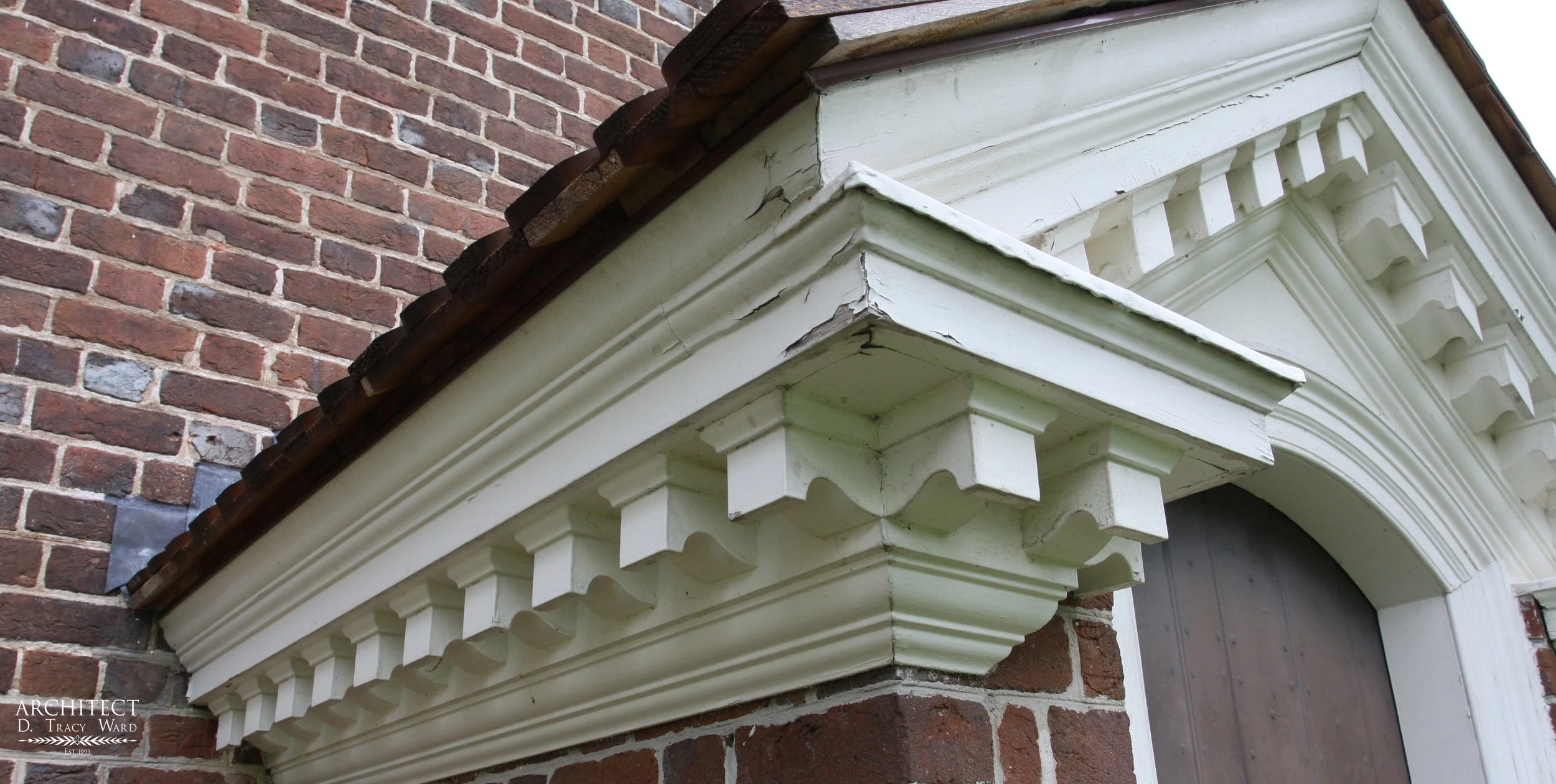
Image courtesy of D. Tracy Ward 2016
Gunston Hall’s exterior architecture features a blend of English Georgian and Colonial, while the interior displays English Rococo, Palladian, Chinese, French Modern, Gothik – and overall “presents a splendid picture of a tide-water Virginia house”.
Among several fascinating interior details is an odd and intriguing wooden pole leaning in a hallway. When asked by a caretaker, the simple object folded out to create a ladder… yet another invention designed by fellow Virginian Thomas Jefferson.
While the house is relatively simple and only one-and-a-half stories, the architectural details, absolute proportions and the general academic accuracies strongly suggest the involvement of architects and craftsmen trained in the dignified classical precedents of Greece and Rome. Archaeological research continues in and around the house, constantly revealing new findings, shedding new light on the evidences, and solving longstanding mysteries. For years those frustrating unknowns included the exact origination of the architectural design, as well as the builder.
Happily, recent researched information divulges the probable involvement of expert designers/craftsmen/master carvers hired directly by George Mason and shipped to Virginia from London, England. Architect William Buckland (1734-1774), trained as a joiner/carpenter, crossed the Atlantic to Virginia as a servant indentured to George Mason. The interior design is attributed to his skill, while it is believed the exterior building shell was already completed when Buckland arrived. Master carver William Bernard Sears (?–1818) is credited with translating Buckland’s designs into beautiful carved wooden works of art. Not much is known of his birth and early life, but Sears is also believed to have begun his indenture at Gunston Hall. After their indentures expired, Mr. Sears and Mr. Buckland worked together often on homes and churches in the area into the 1770’s until Buckland’s death and Sears’s apparent retirement as a master carver tradesman.
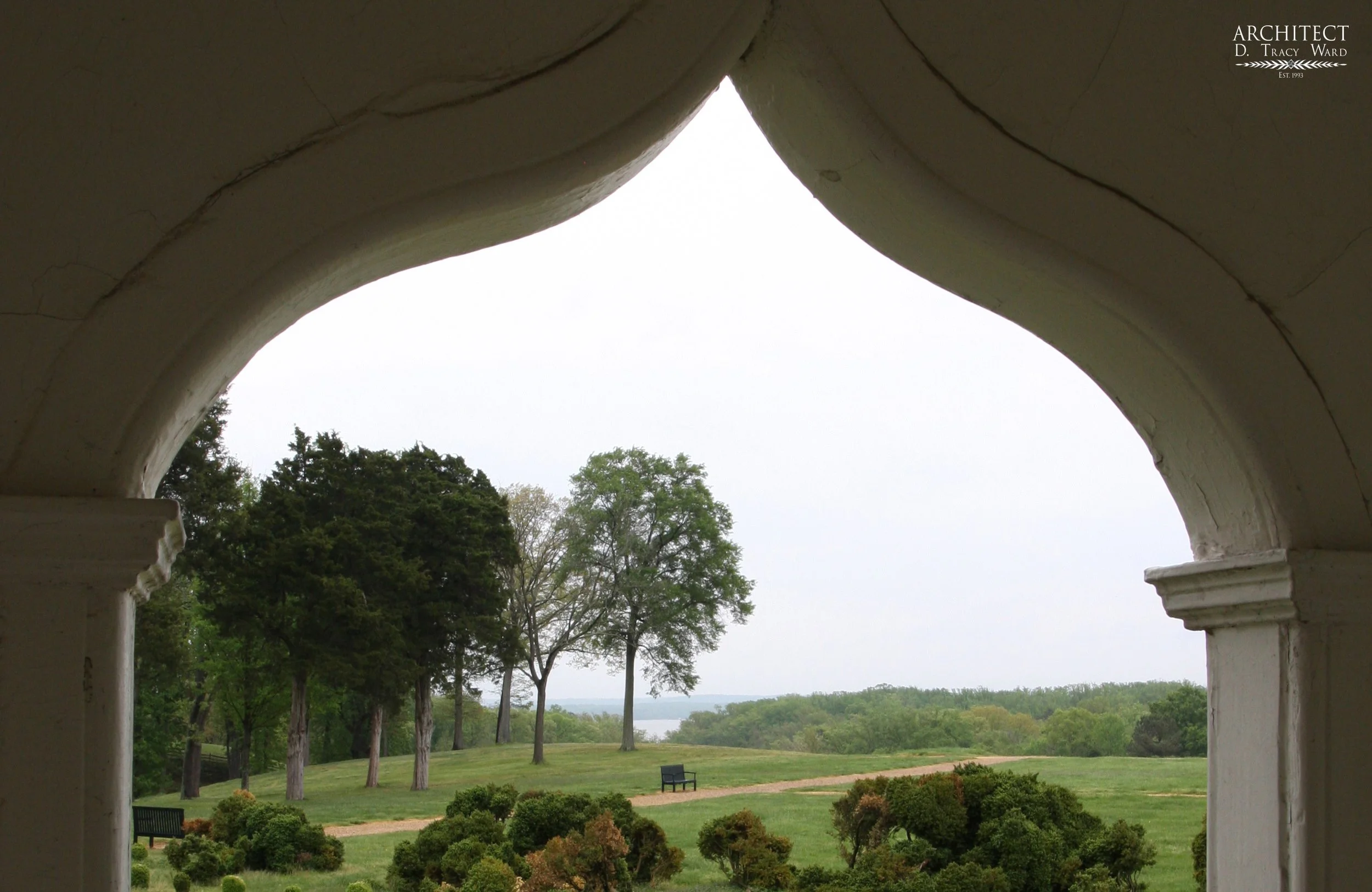
Image courtesy of D. Tracy Ward 2016 – The Potomac River in the distance
Today, Gunston Hall’s importance to the American story is readily accessible and available to all who are willing to invest the time and submit to an adventure of exploration. However, the property, the mansion, the outbuildings and the cemetery were almost lost and forgotten to neglect and financial hardship. The estate survived generational deaths and other difficulties to remain in the Mason family through the Civil War. But in 1867, Gunston Hall began several decades of decline, repeated sales and skeptical lease conditions until finally, in 1912, it was purchased for $24,000 by Louis Hertle (1860-1949), a successful businessman from Cincinnati and Chicago.
Mr. Hertle began a serious restoration process in 1913 by commissioning prominent historian and architect Glenn Brown (1854-1932). Perhaps not widely known today, Mr. Glenn Brown’s architectural career was illustrious and significant during the late 19th and early 20th centuries. A child of Alexandria, Virginia, Brown was destined (or so his father thought) for medicine, law or the ministry – as only those careers “were callings fit for a gentleman”. However, Brown fell in love with architecture and was trained at MIT, being heavily influenced in his early years by H.H. Richardson (1838-1886). He began his own practice in 1880 and subsequently enjoyed a long career of new construction projects as well as large-scale urban planning achievements, and ultimately an expertise with historic restorations…including that of Gunston Hall.
As he had himself requested, upon Hertle’s death in 1949 and having no children or heirs, Gunston Hall was gifted to the Commonwealth of Virginia to be administered by Regents from The National Society of The Colonial Dames of America.
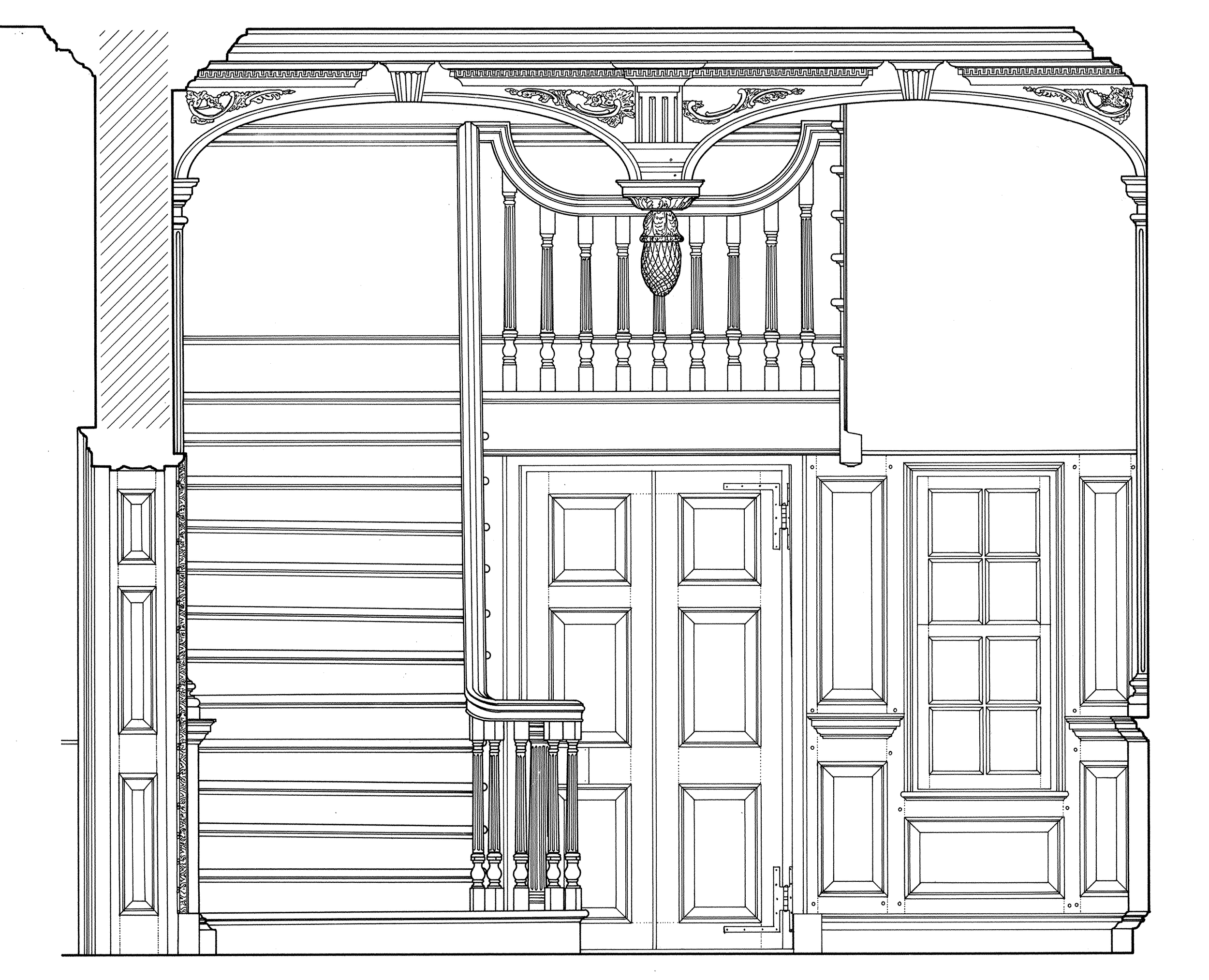
Image courtesy Library of Congress – 1981 measured drawings
George Mason is perhaps one of the lesser known or least famous of the Founders, but his legacy cannot be minimized. Without his efforts 240 years ago to author those 10 amendments we now call the Bill of Rights, America could not function and likely would have collapsed by now. Imagine how your life would be without:
Trial by Jury
Freedom of speech
Right to public assembly
Due process
Right to bear arms
We salute Mr. George Mason, who never pursued political office, and when elected the first US senator from Virginia – he declined. He never pursued a legal license nor engaged in legal practice, and yet he was:
“one of the foremost legal minds of his time whose counsels were coveted by lawmakers and lawgivers”.
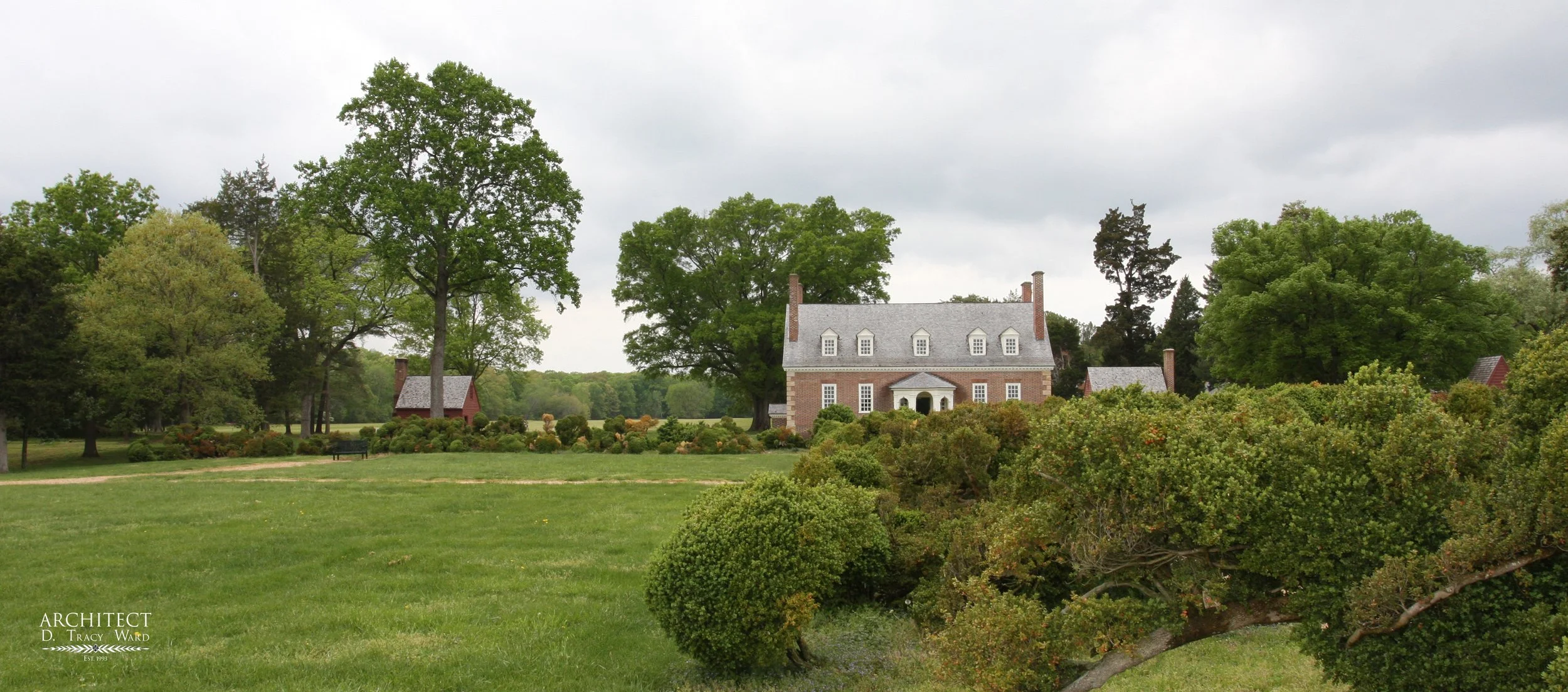
Image courtesy of D. Tracy Ward 2016
References:
The Architectural Treasures of Early America (series) / Volume VIII Early American Southern Homes (p 126-150)
http://gunstonhallblog.blogspot.com/2013/11/louis-hertle-restores-gunston-hall.html
Sons of the South / 1961 Clayton Rand
D. Tracy Ward, Architect
Uploaded on the anniversary of Mason’s 1792 death October 7, 2018 – DTW’s Blog #0035
Our Original Posts, including images when applicable, are copyrighted © 1993-2018 by D. Tracy Ward and Benchmark Design, PC. God bless America! Treasure Liberty always and pass it on! “Architecture aims at Eternity.” [CHRISTOPHER WREN, Parentalia]