Punishment or Penitence
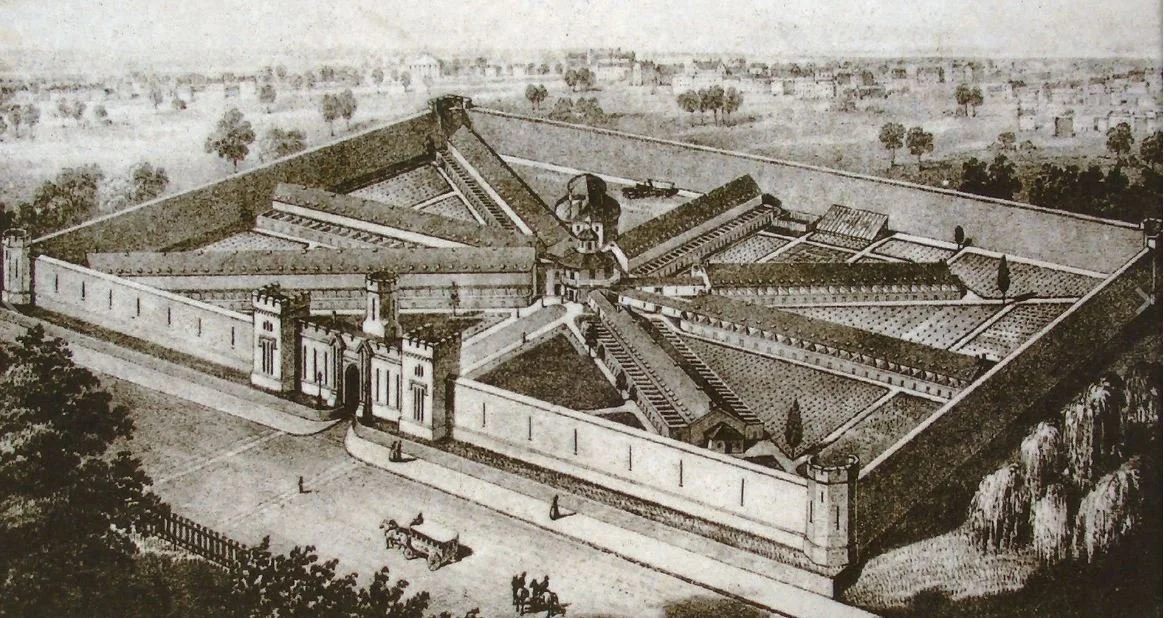
Eastern State Penitentiary built 1829
“Juridical punishment . . . can be inflicted on a criminal, never just as instrumental to the achievement of some other good for the criminal himself or for the civil society, but only because he has committed a crime: for a man may never be used just as a means to the end of another person. . . . Penal law is a categorical imperative. . . . Thus, whatever undeserved evil you inflict on another person, you inflict on yourself. ”
My wife and I, with our youngest son Noah, recently visited the fascinating and formerly active prison in Philadelphia, Pennsylvania known as Eastern State Penitentiary. In 1971, the State of Pennsylvania closed it down 142 years after its first prisoner, and the City of Philadelphia purchased it with plans to reuse or redevelop the grounds beginning in 1980. Luckily for us, it never was redeveloped. Instead, it was reinvigorated with regular guided interpretive tours beginning in 1994, and as you might imagine, today it’s a great place for filming scary movies and hosting Halloween events. But what about the early days? How and why did it come to be built here? Is it really worth saving when it sits on exceptionally valuable property in downtown Philly?
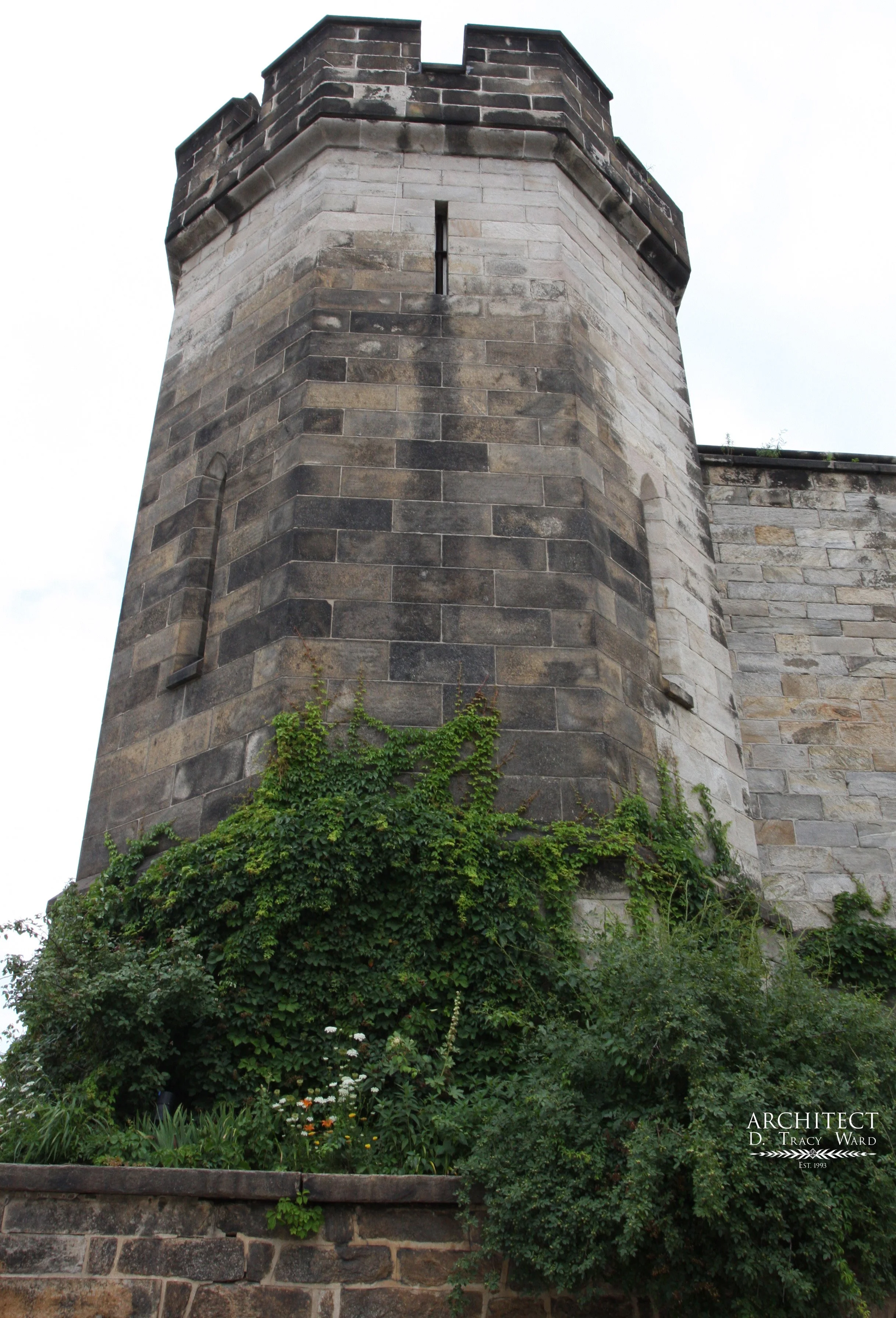
Copyright 2015 D. Tracy Ward
Let’s go back in time to 1787 and the home of Benjamin Franklin, which was the meeting place for members of The Philadelphia Society for Alleviating the Miseries of Public Prisons. With the support of Dr. Benjamin Rush, the Society wanted to somehow improve prison conditions in America and Europe. Over 40 years later, Dr. Rush’s radical idea was built and received its first prisoner in 1829. It was the world’s first facility designed to create in a criminal’s heart: Shame, Repentance, Contrition, Atonement, Remorse, Regret, Sorrow, Compunction, and Apology – in a word: penitence, which is the root word of course for the building typology now known as a penitentiary.
According to Merriam-Webster Dictionary online, the word “penance” means: 1) an act of self-abasement, mortification, or devotion performed to show sorrow or repentance for sin; 2) something (as a hardship or penalty) resembling an act of penance (as in compensating for an offense). This new methodology for treating prisoners meant they would not simply punish, but transform the criminal toward spiritual reflection and change.
As you might imagine in the early 1800’s, the young United States was rough and rugged. Where did the two Founding Father “Benjamins” (Franklin and Rush) find academically trained and experienced designers for such an innovative and inventive facility? Talk about a who’s-who of 19th century architectural heroes – John Haviland, Thomas Walter, Charles Bulfinch, William Strickland, Sir Charles Barry, and Claude-Nicolas Ledoux . . . were all designing prisons!
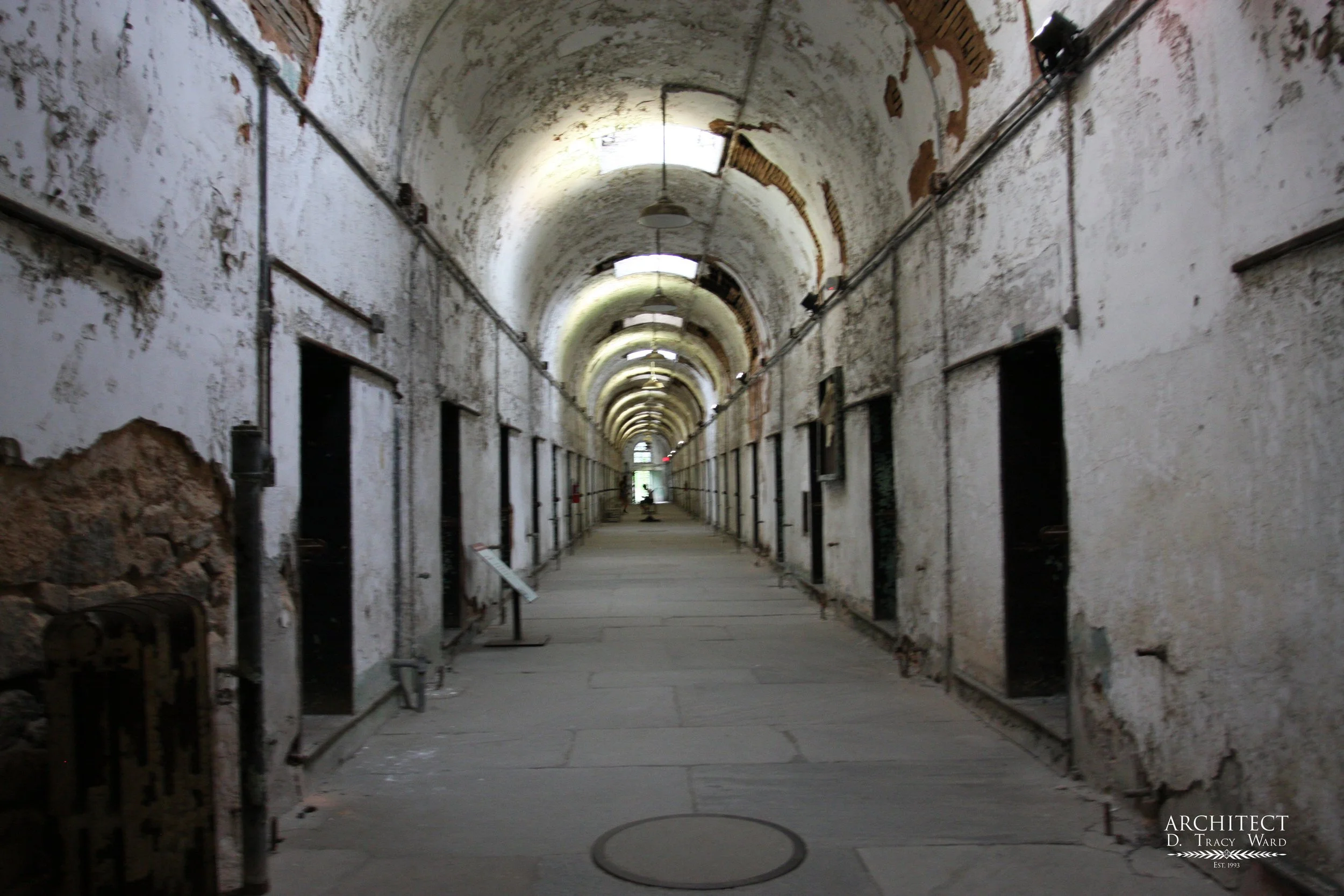
Copyright 2015 D. Tracy Ward
Each man was an active and prominent architect & builder during those days, and you might recognize these names relative to their designs of such famous places as the US Capitol, White House, Philadelphia City Hall, Boston State House, Tennessee State Capitol, the steeple of Independence Hall, and the Houses of English Parliament, etc.
British born John Haviland created a distinctive geometric floor plan with architectural elements such as barrel vaults, skylights and private (isolated) cells with outdoor spaces…all meant to change or redeem the inmate, not just detach him or her from society. It is believed that over 300 subsequent prisons around the world based themselves after the Eastern State Penitentiary philosophy and its Gothic style architectural design. Of significant note: a young 18-year-old artisan learning his trade worked on this prison in 1833, later to become one of America’s most prominently published architects about 15 years later. . . Mr. Samuel Sloan (A Masterpiece Incomplete)
But not everyone agreed to the effectiveness of solitary confinement. Charles Dickens visited the prison in 1842 and wrote: “… I hold this slow and daily tampering with the mysteries of the brain to be immeasurably worse than any torture of the body…” But now that I’ve done a little research on the methods of torture commonplace up to this point in history, personally I would readily agree to lonely captivity in lieu of the chastisement of the day. Ancient societies (Roman, Jewish, Egyptian) considered it necessary within their justice system to punish the immoral in order to deter others. For instance, Romans had crucifixion, Jews had stoning, and Egyptians had desert sun death. In the early United States, many European standards (we now consider cruel) continued for criminal punishment, including castration. Thomas Jefferson actually wrote that he preferred castration in lieu of the death penalty for certain crimes in Virginia.
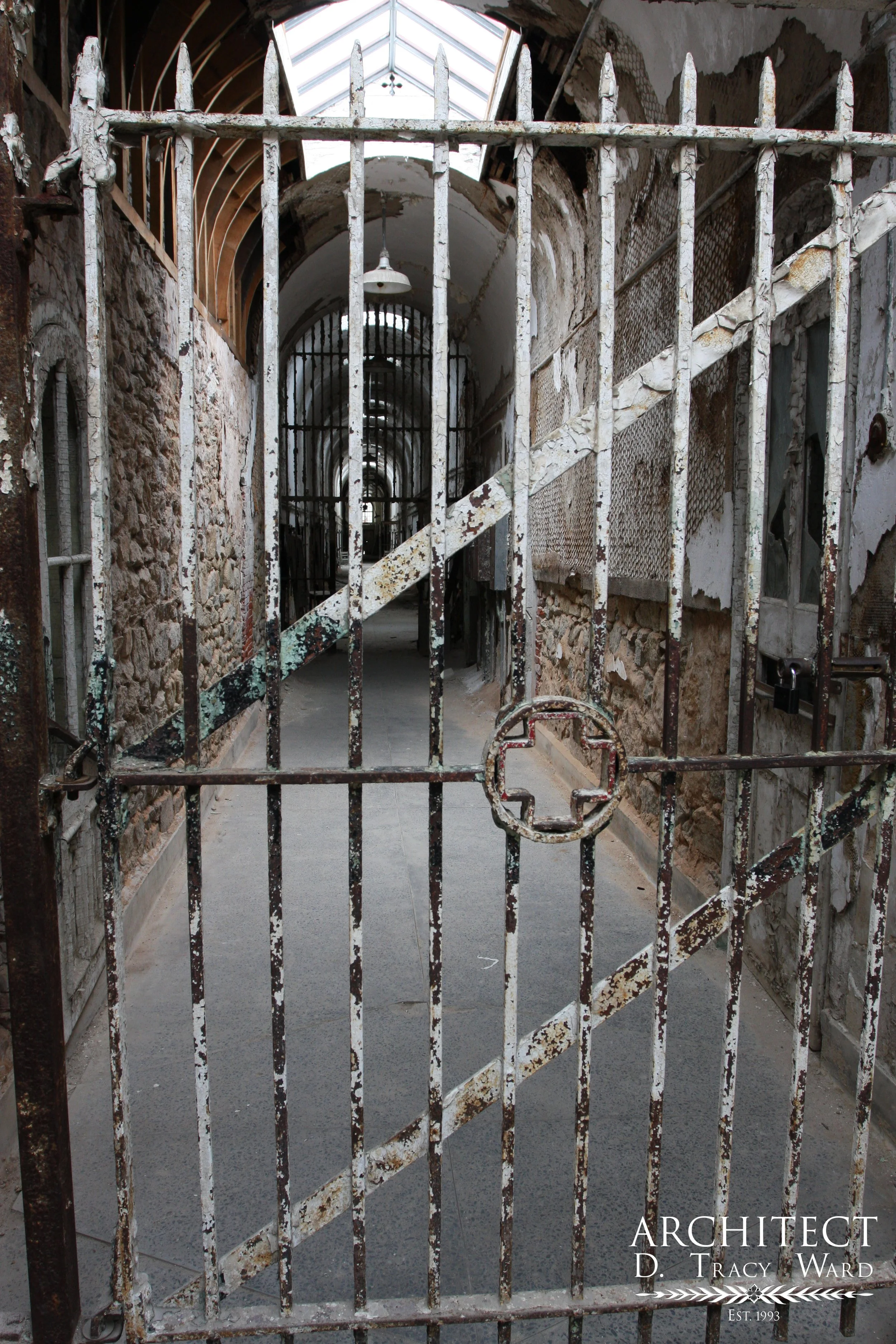
Copyright 2015 D. Tracy Ward
This strange facility in Philadelphia became world famous, and helped bring about a more humane method of criminal treatment during its almost 150 years of activity. The remains and ruins of Eastern States’ architecture today are awe inspiring, as well as creepy. Its bizarre history encapsulates a wide range of famous personalities (including Al Capone) as well as documents an ongoing laboratory for the study of spiritual psychology, bodily well-being, and societal safety.
You should definitely visit, but wait until the end of October for the full effect.
Happy Halloween 2018!
References:
D. Tracy Ward, Architect
Originally prepared 2015 – Reedited 2018 – DTW’s Blog #0029
Our Original Posts, including images when applicable, are copyrighted © 1993-2018 by D. Tracy Ward and Benchmark Design, PC. God bless America! Treasure Liberty always and pass it on! “Architecture aims at Eternity.” [SIR CHRISTOPHER WREN, Parentalia]