History - Why Should We Care?

Library of Congress – Central Pacific Transcontinental Railroad, Tunnel No. 39, Milepost 180.95, Cisco, Placer County, CA
“A nation that forgets its past can function no better than an individual with amnesia.”
At The American History Guild, our slogan is “WHERE THE PAST IS ALWAYS PRESENT”. But really – what is so important about the past? Isn’t today, this very day, the only point in time that counts? Who wants old news? Who can use old technology? Who wants timeworn stuff? New at any price, right? By now, you feel the overplayed sarcasm. So let’s consider for a moment. . . why History (studying the past) is so very, very important, and why you really should care…a lot.
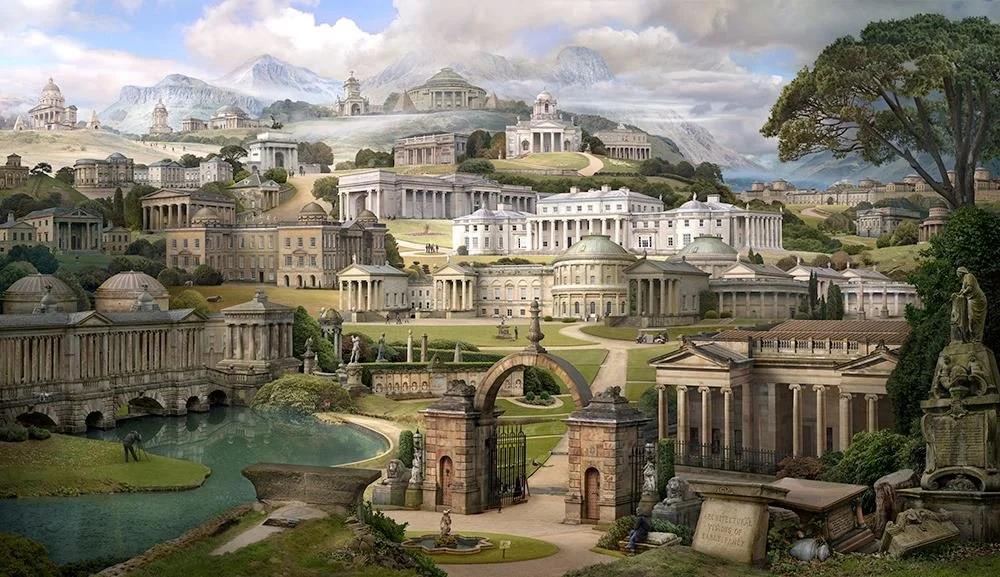
The works of Architect Sir John Soane (1753-1837)
To begin, let’s deliberate who DOES care. God cares, as evidenced by the Bible. The Holy Bible is…simply stated – a history book. Ironically this best-selling book (of all time) also speaks of the future as well. Some say it’s His Story. In fact, that is the point of this commentary – one can’t plan for the future without an understanding of the past. Again from the Bible (Proverbs 29:18)
“Where there is no vision, the people perish: but he that keeps the law, happy is he.”
Youth tends to have its own narcissistic focus. Teenagers are notorious for exhibiting an attitude of “I am the center of the universe”. But adulthood brings wisdom (or should), sometimes not by choice, brought on by an innate will to survive. Most of us get to a certain age and it clicks… I do care about those that came before me! Our forefathers and ancestors were not much different than we are today. Yes, the clothes, mannerisms, and communication methods change, but not always and not necessarily for the better. Sometimes the “good ole days” really were. But sometimes, as in war, they most certainly were not.
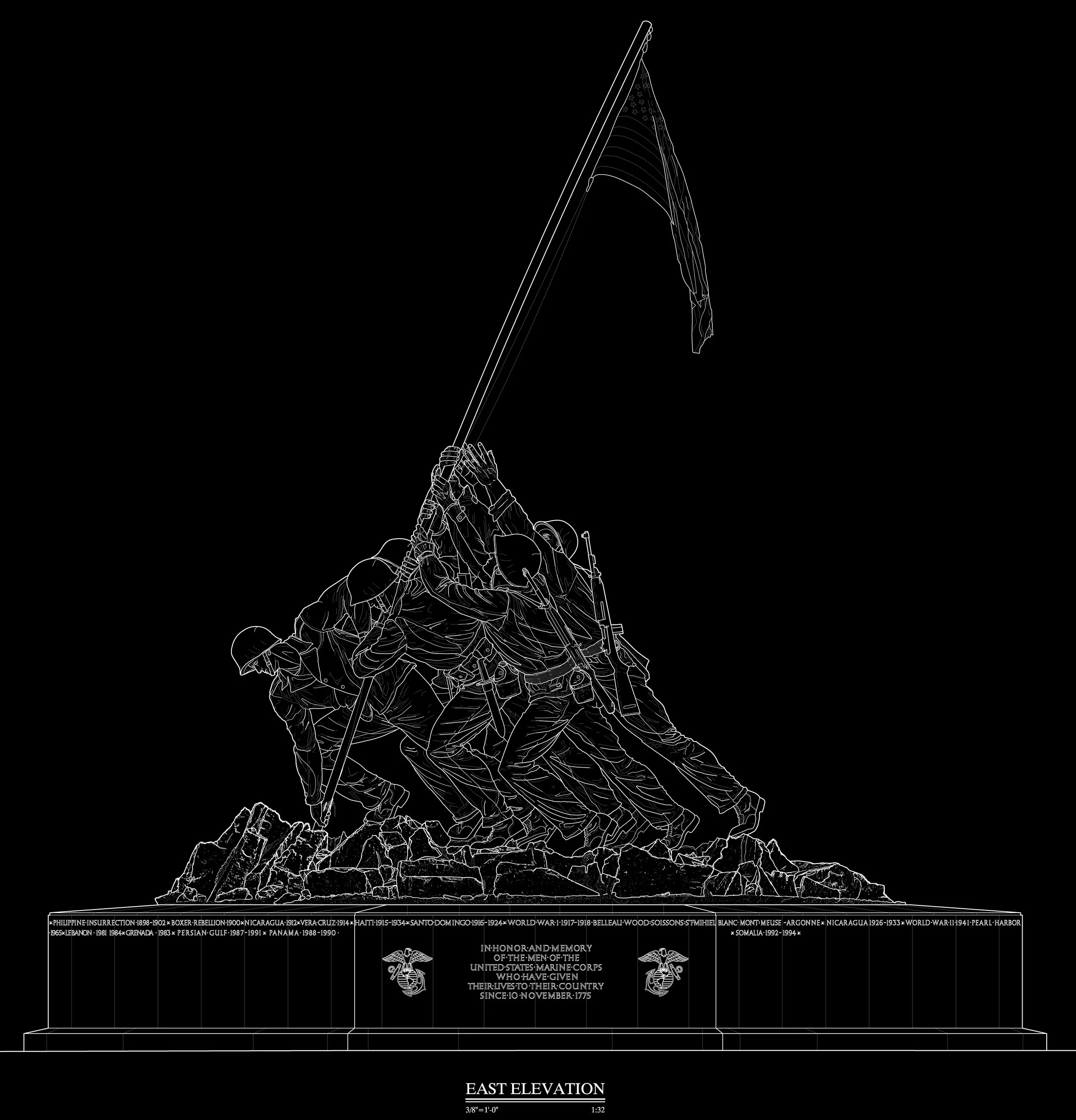
Library of Congress – United States Marine Corps War Memorial, Marshall Drive, Arlington, Arlington County, VA – constructed 1953-55.
Take healthcare and medicine for example – we all tend to believe that physicians and medicine today are far advanced from just a few years ago. And, in many cases, that is a true statement. But for a sickness today, are we to only look for a diagnosis and cure from none other than a modern hospital? I have a brother that is an incredible physician and has treated 1,000’s of patients during his career. Does he have all the answers? Do today’s doctors and nurses and pharmaceutical laboratories have ALL the answers? Could we ever find a solution to a modern medical dilemma by looking backwards?
Case in point – a recent news story pronounces of scientists recreating a 1,000-year-old Anglo-Saxon treatment for eye infections and tested the potential cure on a modern-day superbug: MRSA. It seems to be working and those laboring on the treatment believe many modern medical ailments may have treatments or cures buried in past remedies. Imagine that – modern medicine referring BACK 1,000 years for a solution!
A Little History of the World – E H Gombrich – 1936 page 92
Much of the lack of interest in stories of the past lies in the modern educational system. The way students learn (or are forced to learn) in a classroom setting can be lackluster and boring. School history courses (per my own experience) are often nothing more than a series of dates and names…memorized just enough to pass the next exam. I’ve been encouraged recently while reading a book (A Little History of the World) written initially in 1936 by E.H. Gombrich, who in forty concise chapters, tells the story of mankind from the Stone Age to the atomic bomb.
Gombrich instructs his readers in the preface: “relax, and follow the story without having to take notes or to memorize names and dates. In fact, I promise that I shall not examine them on what they have read.” In other words, the process of reading and learning is intriguing and habit forming….it’s actually fun to absorb and acquire knowledge about the amazing people and accomplishments of the past when presented (teacher) and pursued (student) appropriately.
My personal focus is of course American architecture & art of the past, but all facets of history impact each of us every day. “The test of time” is an often-quoted phrase, but it alludes to the truth of past subjects that survive (or fade) ever changing fashions or social leanings. Men and women become great by learning, and scholarship from past generations (in time) in particular. The world’s greatest leaders apparently agree:
“Study history, study history. In history lies all the secrets of statecraft.”
References:
D. Tracy Ward, Architect
Originally prepared 2015 – Reedited 2018 – DTW’s Blog #0025
Our Original Posts, including images when applicable, are copyrighted © 1993-2018 by D. Tracy Ward and Benchmark Design, PC. God bless America! Treasure Liberty always and pass it on! “Architecture aims at Eternity. Architecture has its political Use; publick Buildings being the Ornament of a Country; it establishes a Nation, draws People and Commerce; makes the People love their native Country, which Passion is the Original of all great Actions in a Common-wealth.” [CHRISTOPHER WREN, Parentalia]