Is Older Architecture Better?
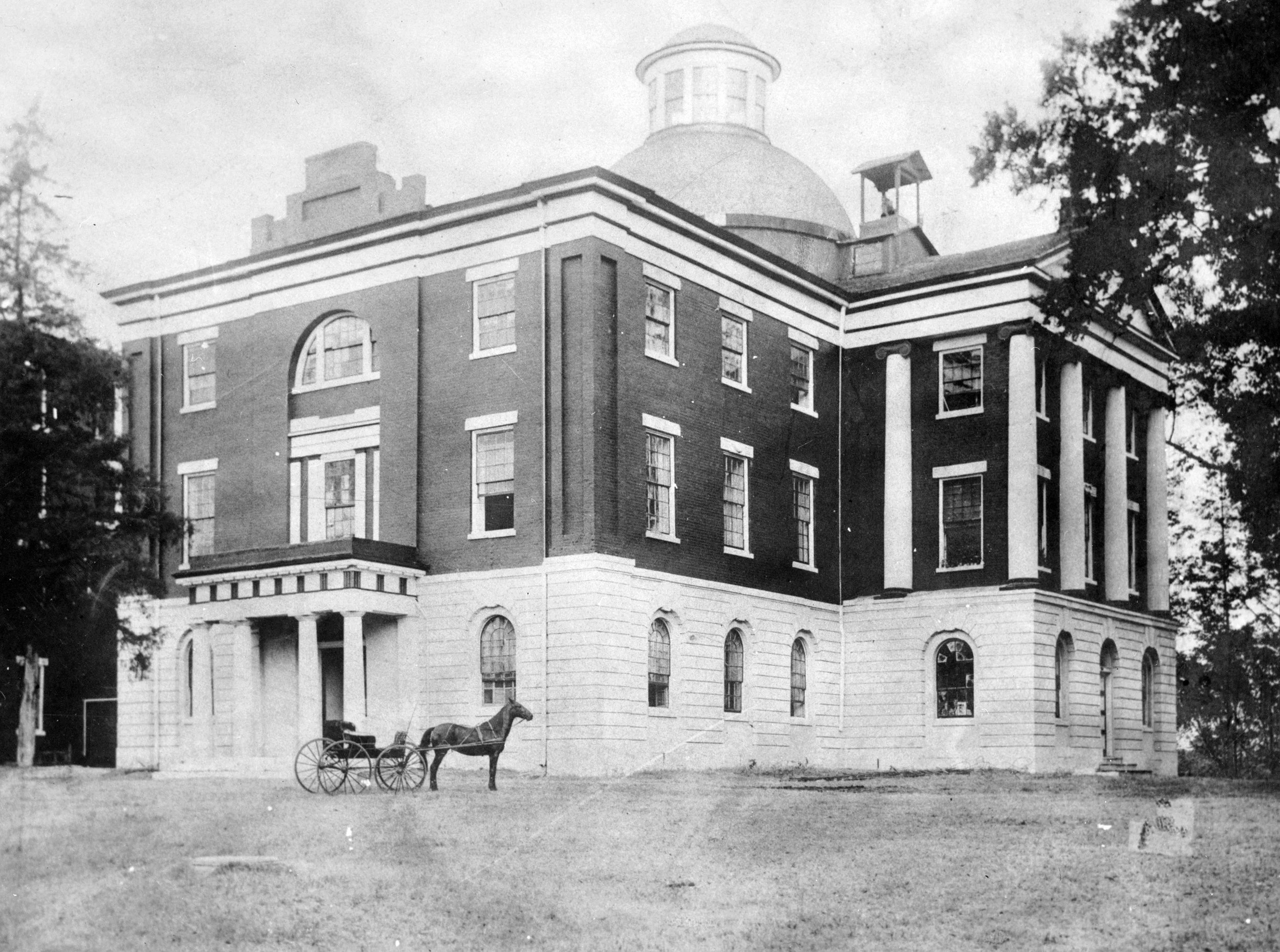
The Capitol Building at Tuscaloosa burned in the 1920’s – Library of Congress (note the elegant horse & carriage). Perhaps its simply the lack of automobiles that draws our admiration!
“I hung out with the old folks in the hope that I’d get wise.”
Is it true that older architectural designs are somehow inherently more thoughtful, more meaningful and capable of lifting your spirits… as well as attracting your sense of curiosity? Have you ever considered that living or working in a historic, traditional (or classically designed) building can be quite comforting in some way…even if one can’t articulate the reasons? So why can’t newer contemporary projects evoke the same comfort, familiarity, delight, romanticism and picturesque qualities that older historic buildings typically bring to mind? What’s so great about being “old”? It can be easy – even by amateurs – to quickly determine which buildings are old and which buildings are new. So what’s the difference? Is it just a matter of peeling, flaking and fading paint? Is gray hair the only difference between a teenager and a senior adult? Why do we seem to be intrigued by the old and aged?
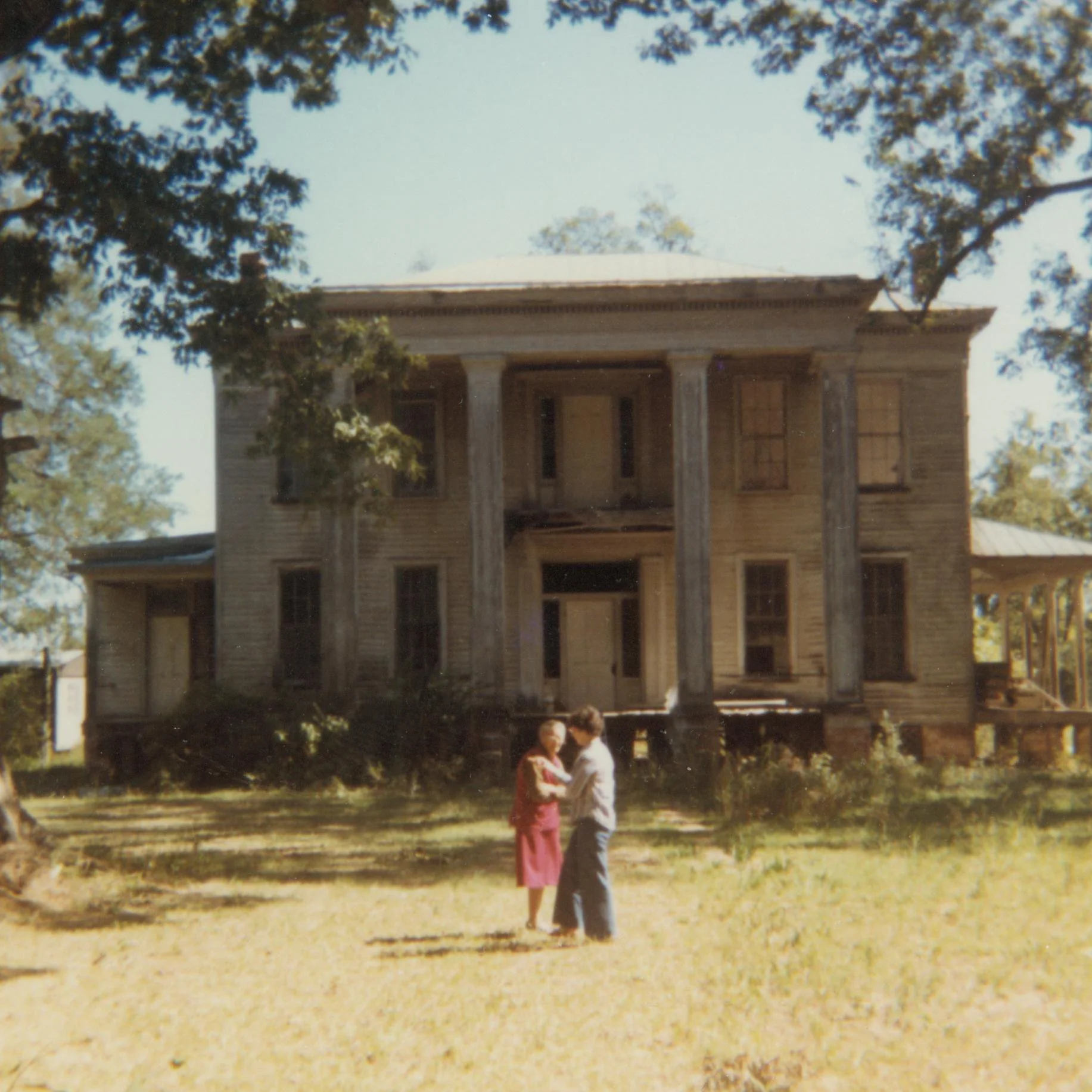
My Mother & Grandmother just as the restorations began in 1980-81
Oh there’s so much more than one might see at first glance! Historic architecture is like that – an older building often has some degree of mystery within its past with intriguing and captivating stories to uncover and tell. Older buildings have survived the odds. They’ve seen generations come and go from the cradle to the grave. They’ve housed and protected their occupants against enemies, animals and violent weather many, many times. And in countless cases, older buildings have been lovingly maintained and/or restored over the years.
My cousin Ellen Caldwell recently stated so eloquently: “Is there a sense of “wisdom” in the aging buildings? A sense of “survival” in their complexities? They hold history in their walls…newer buildings are just new. There’s hope that one day they’ll be old and wise…”
I love that statement: “newer buildings are just new.” Therefore is it possible that our fascination with historic architecture goes deeper that the visual? ‘Wisdom’, ‘survival’, ‘complexities’, ‘history’, and ‘experienced’ – these are terms that characterize “old”, but none are necessarily visual imagery. Can the aesthetic design of the architectural built environment actually have psychological impact? Maybe older buildings demand a level of “respect” that newer buildings (and younger people) have not yet earned. As my late father once said, “you need to enjoy and appreciate the aging process because there’s only one alternative!” Maybe that positive attitude helps older folks (and i’m becoming one fast!) and older buildings – age gracefully and admirably, and therefore demand reverence and command respect.
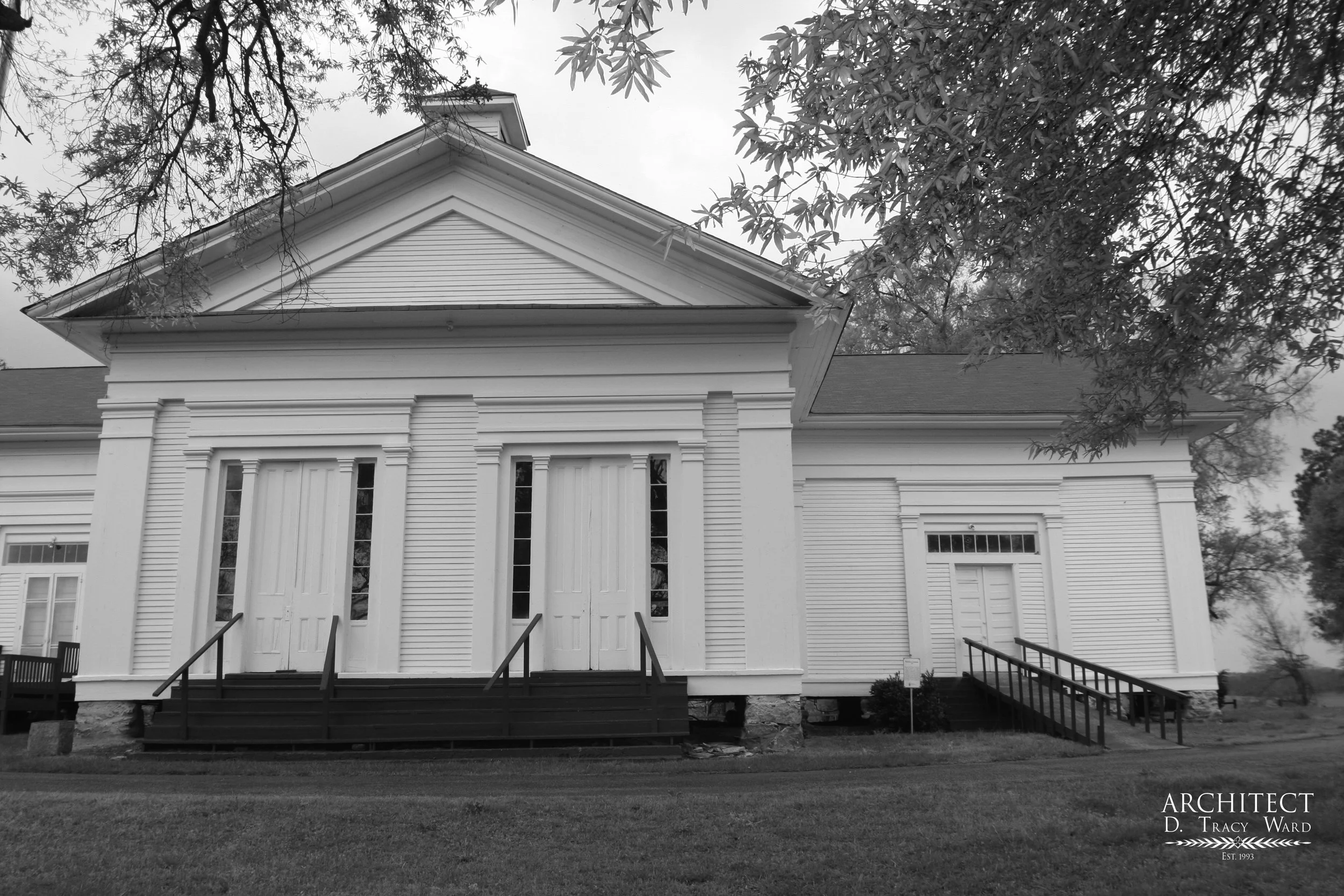
Stilesboro Academy built 1859 in north Georgia – photo 2015 Tracy Ward. The bold Greek Revival details are rarely used today – juxtaposed here against the small horizontal lap siding. I think its absolutely stunning & spectacular!
As an Architect who is passionate about history and the influences that created the older towns, neighborhoods or buildings that still remain (especially in the South), I’m constantly comparing, analyzing and questioning newer projects. In my firm’s new projects, our goal is to re-purpose those aspects that we humans love about the old buildings and places. Our greatest compliment (even when our projects are brand new and under construction) is to have a guest ask about the “restoration” we are performing.
In architecture schools, glossy magazines, and international awards competitions… it always seems that the good-ole classic or tradition-based designs are viewed by the elite and academics as “too easy” or “lacking creativity”. But as I get older, “classical” music or “old / classic” movies seem so much more intelligent, thought-provoking and pleasurable than newer, shallow, popular choices of today. Similarly nothing evokes awe and reverence like a massive old oak tree or likewise an intelligent, man-made structure that has survived to receive its reward of faded and weathered surfaces that only time can bestow.
Is “older” architecture better? I say – ABSOLUTELY. What say you?
Similarly, is there a difference between using (and reusing) old buildings for modern life vs. designing new buildings that are like the buildings of the past? Is it possible for an original and a replica to both be authentic? Ah, that is the subject of a future article!
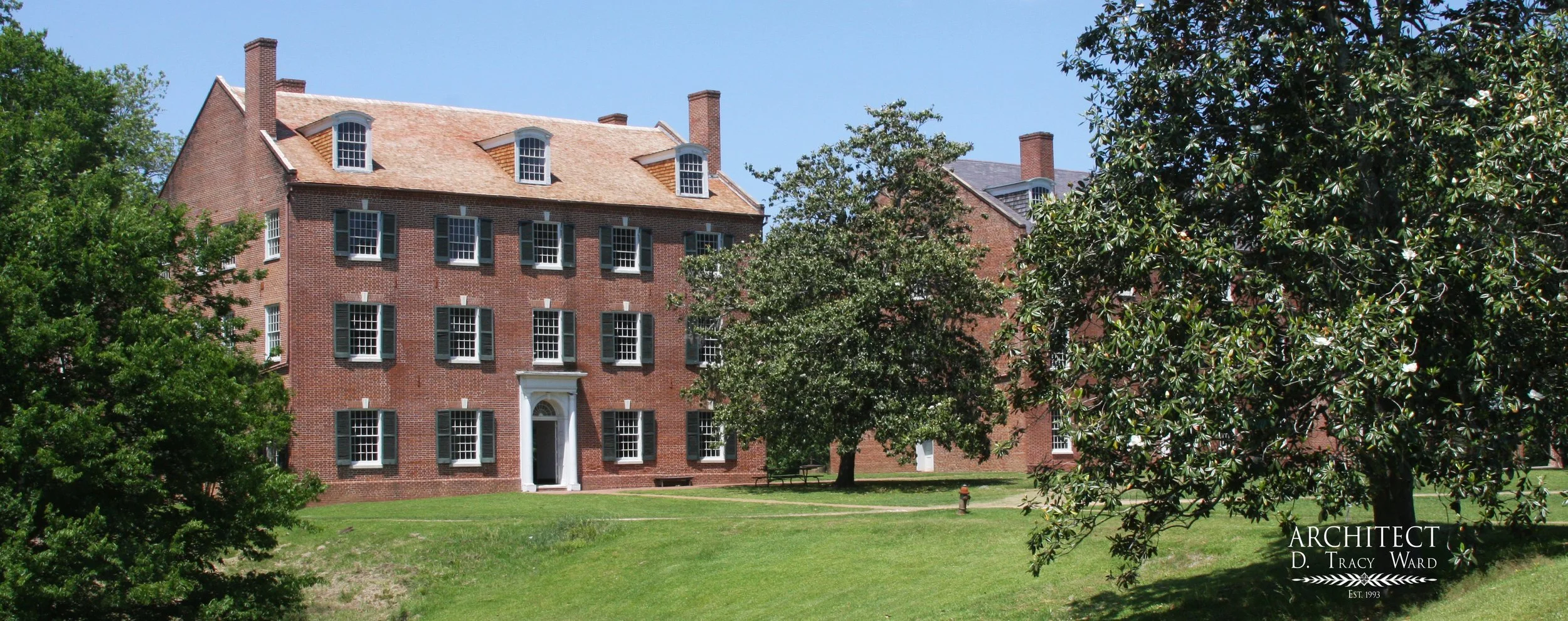
Tracy Ward 2014 photo – Jefferson College (chartered 1802) in Washington, Mississippi
References:
https://www.archives.gov/research/catalog The National Archives Catalog
http://www.loc.gov/collections/historic-american-buildings-landscapes-and-engineering-records/
D. Tracy Ward, Architect
Originally prepared 2013 – Reedited & Uploaded February 2018 – DTW’s Blog #0012
Our Original Posts, including images when applicable, are copyrighted © 1993-2018 by D. Tracy Ward and Benchmark Design, PC. God bless America! Treasure Liberty always and pass it on! President Herbert Hoover, October 18, 1931: “This great complex, which we call American life, is builded and can alone survive upon the translation into individual action of that fundamental philosophy announced by the Savior nineteen centuries ago…” (read Mark 12:30-31)