Irony at Champion Hill
“Grant’s crown of immortality was won, and the jewel that shone most brightly in it was set there by the blood of the men of Champion’s Hill …… Six thousand blue and gray-coated men were lying there in the woods, dead or wounded, when the last gun of Champion’s Hill was fired.”
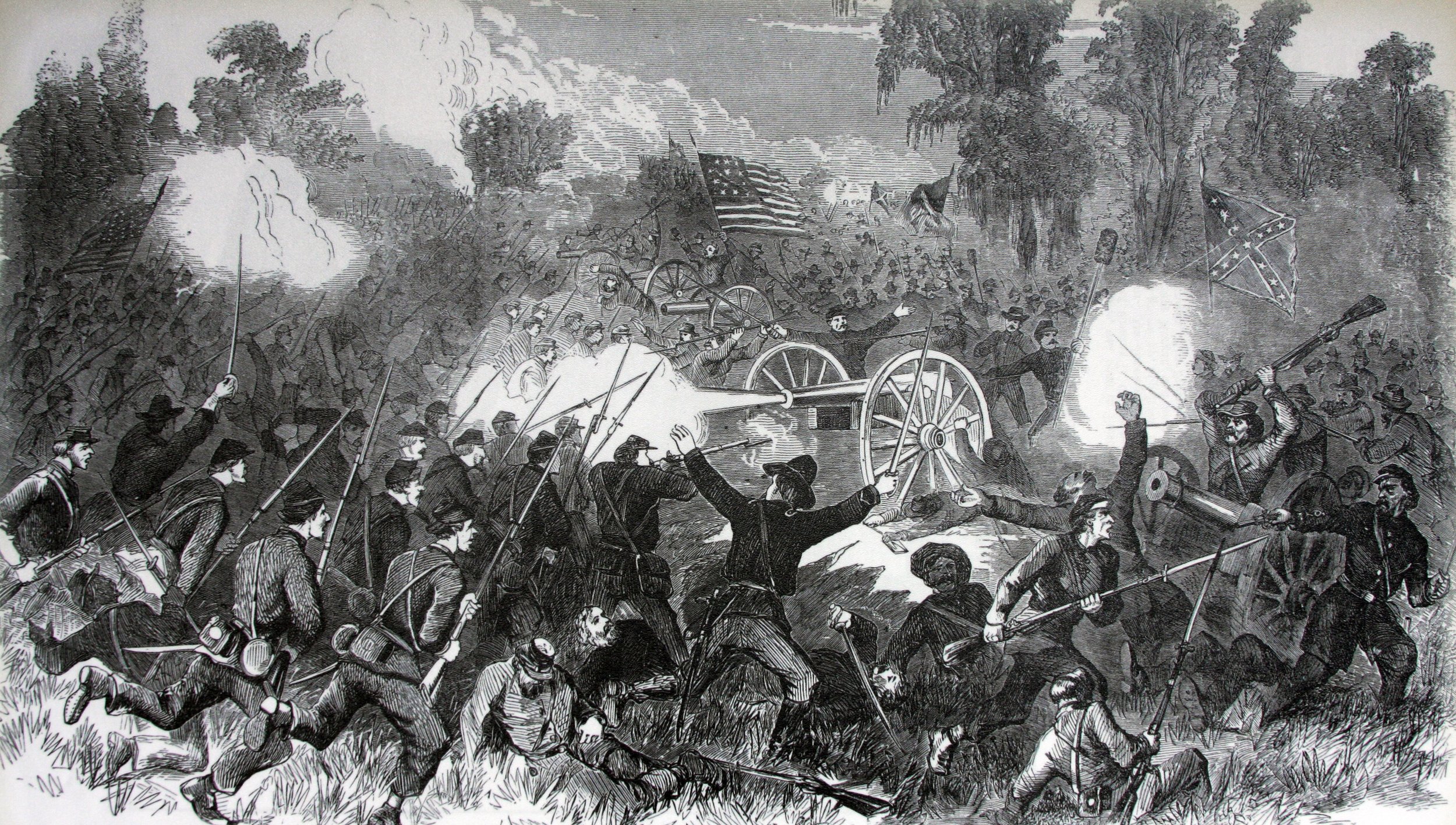
Photo of modern educational panel on the battlefield – original rendering Harper’s Weekly
At 7:00am on May 16, 1863 – the battle lines were drawn in the rural cultivated farm lands halfway between Mississippi’s Capitol at Jackson and the Vicksburg bluffs overlooking the Mississippi River to the west. American brothers fought viciously against one another that day, eventually setting the stage for the fall of the last bastion of the Confederacy at Vicksburg. According to numbers provided by the Mississippi Department of Archives & History, the Union forces of 32,000 simply overpowered the divided Confederate forces of only 22,000.
By 1:00pm – Lieutenant General John C. Pemberton, the Confederate commander, had been divided and pushed into retreat by Union forces commanded by future 18th US President Ulysses S. Grant. The future 1st President of today’s Mississippi State University, Stephen D. Lee, had earlier gained a spot near the Greek Revival Champion house and there, using his binoculars, could see the approaching Union troops.
∗ How ironic that almost 150 years later in 2012, Grant’s Presidential Library would land in Starkville, Mississippi on the campus of Lee’s Mississippi State University.
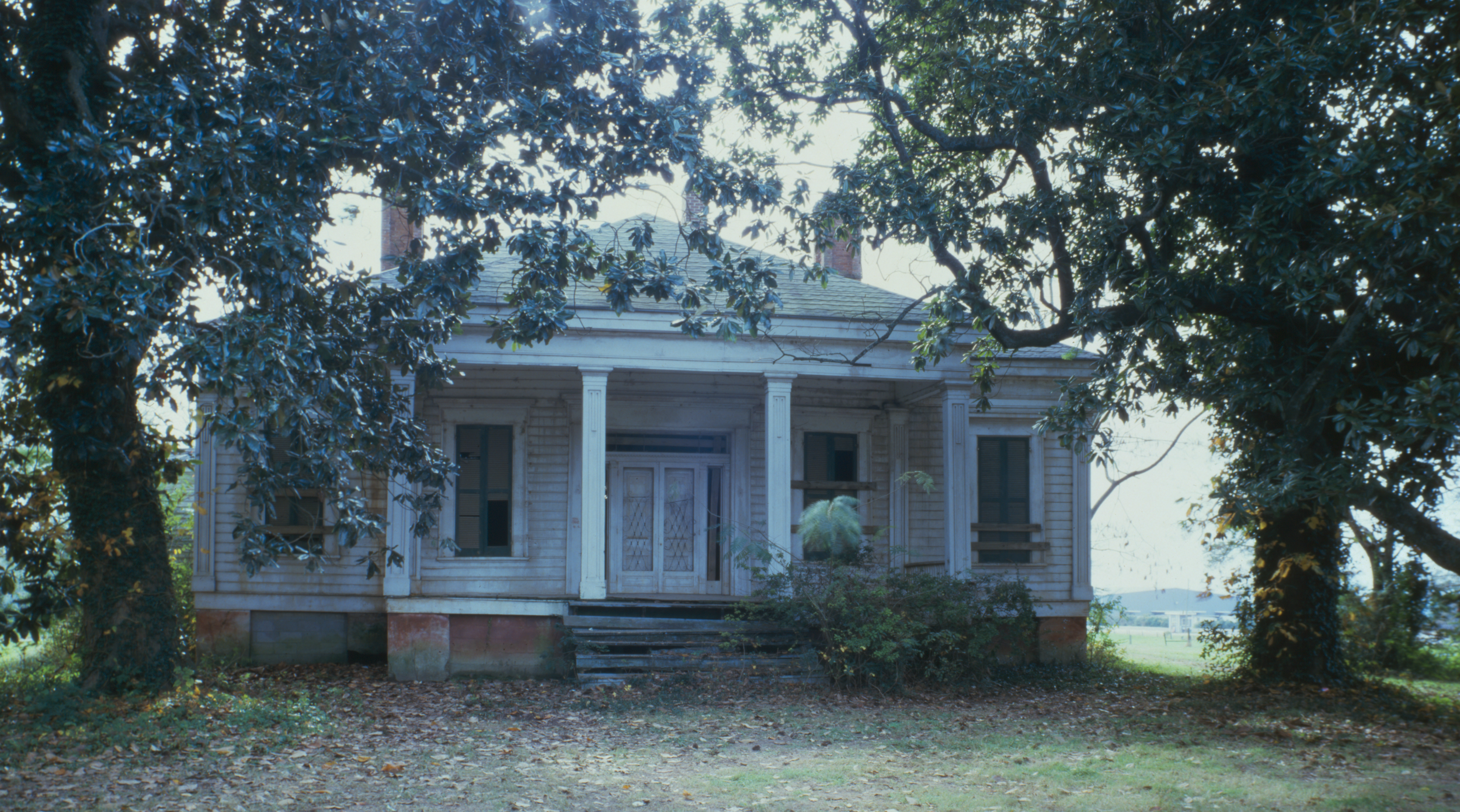
1985 North elevation – Coker House, Champion Hill, Edwards, MS – Library of Congress
The Union army would command the hilltop only hours later. The battle was over that same afternoon. Federal and Confederate casualties totaled over 6,000 lying scattered around a battlefield atop the highest hilltop for miles around.
“But had Pemberton joined his army with that of Joe Johnston right away, had Loring moved his division to Carter Stevenon’s aid when Pemberton first summoned him, or had Grant been defeated that day on Sid Champion’s plantation, Vicksburg might not have fallen. Grant would almost certainly have been relieved of command, and history would now read very differently, were it not for the drums of Champion’s Hill.” Jon Stephenson (www.historynet.com)
The Champion family had moved from North Carolina to Mississippi as early as 1839. The property they purchased was located along the banks of Baker’s Creek, near a road that connected Jackson to Vicksburg. Just before the war, the Southern Mississippi Railroad had built its rails through the Champion property… inadvertently making the property an important target on Union military maps.
Little did the family know in those early pioneer days that their peaceful farm land would soon become stained with the blood of thousands of young men (leading to the fall at Vicksburg and the end of the War), and forever be visited and studied by professional and amateur historians from all around the world. The Champion home was burned in July of 1863, but the nearby Greek Revival Coker home has been partially restored.
Today, the battlefield area maintains a fascinating air of mystery and intrigue as it remains rural and relatively undeveloped. . . a place almost cemented in time.
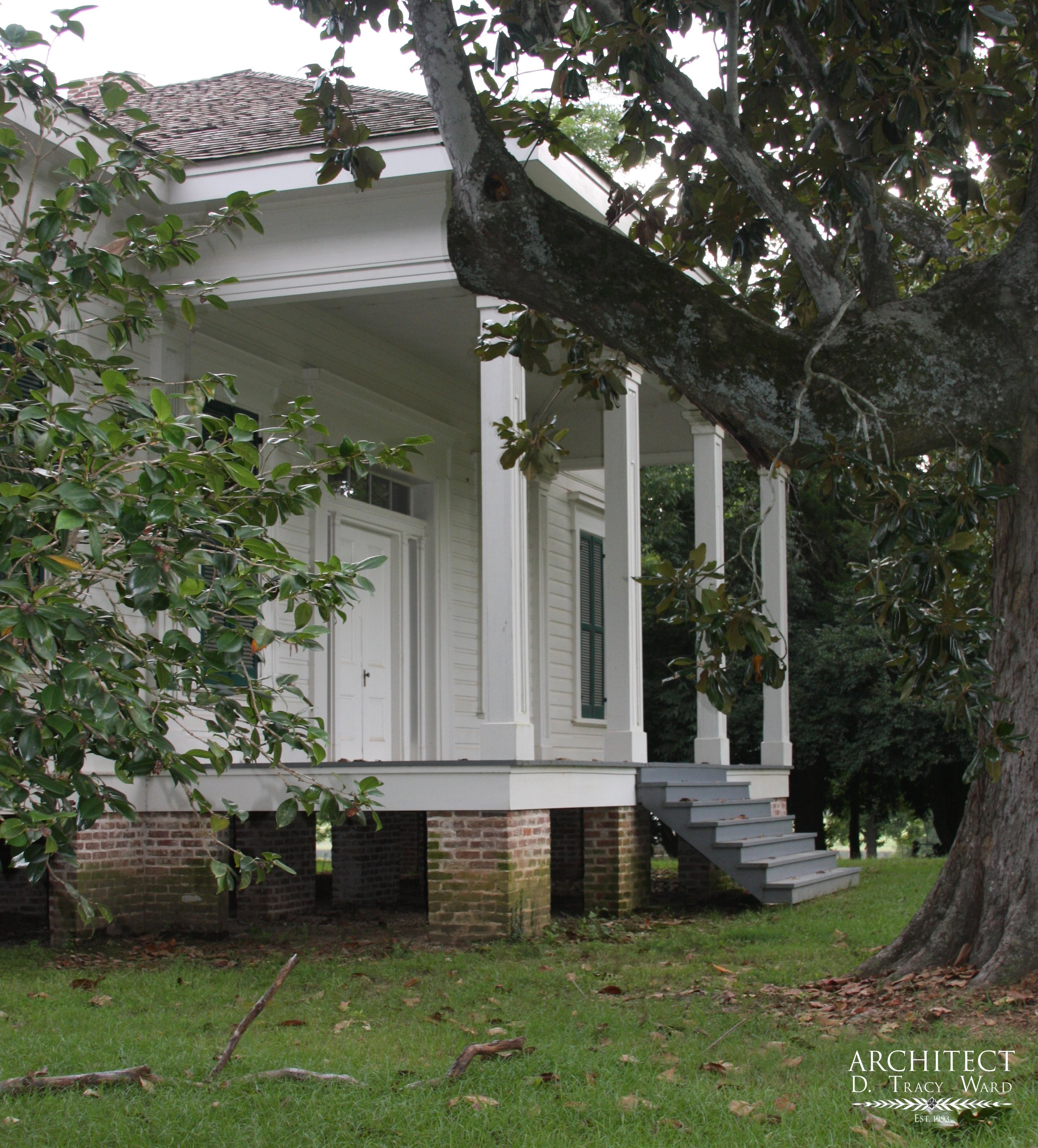
Restored Coker House – photo courtesy D. Tracy Ward 2013
References:
a short video from the Civil War Trust – http://www.civilwar.org/video/the-battle-of-champion-hill.html
National Archives Catalog
HABS / Library of Congress
1971 Nomination Forms – National Register of Historic Places Inventory
D. Tracy Ward, Architect
Originally prepared 2013. Edited and uploaded March 2018 – DTW’s Blog #0014
Our Original Posts, including images when applicable, are copyrighted © 1993-2018 by D. Tracy Ward and Benchmark Design, PC. God bless America! Treasure Liberty always and pass it on! “Men make history and not the other way around. In periods where there is no leadership, society stands still. Progress occurs when courageous, skillful leaders seize the opportunity to change things for the better.” (President Harry S. Truman)