Sheldon Ruins - Circa 1745
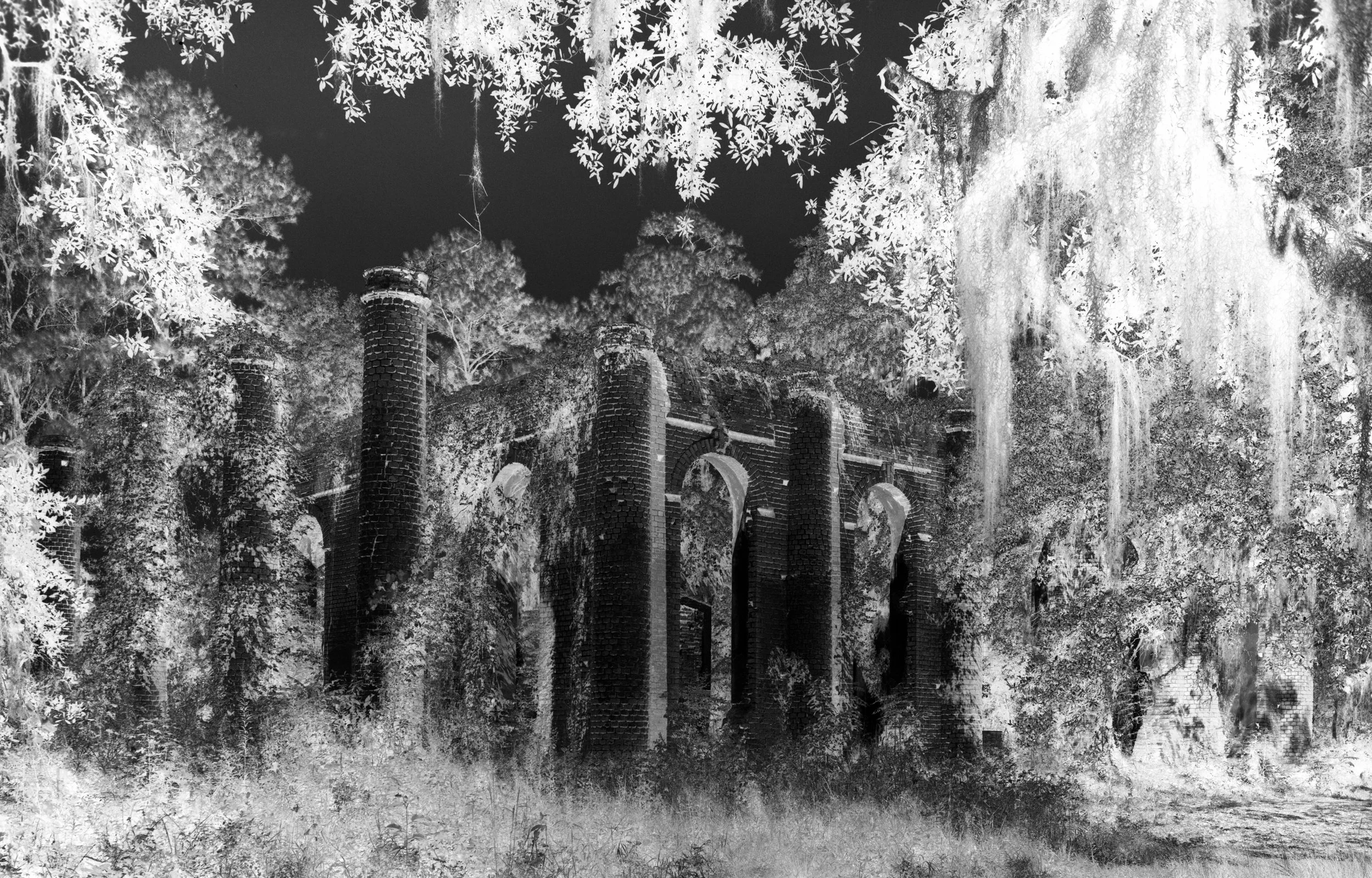
One of the original thirteen, founded in 1663, the State of South Carolina can trace its European roots back into the 1500’s, and its soil today is still dotted with remnants of life 400+ years ago. A day here can be fascinating and mesmerizing allowing oneself to get lost in back roads of the ‘Low Country’. One such rarely traveled gravel road is lined with grand live-oak trees dripping with Spanish moss creating a mysterious tunnel transporting its travelers back in time. And on this shadowy and practically unnoticed road is a most spectacular and extraordinary relic of the past – the brick structural ruins of Prince William Parish Church – aka “Sheldon” constructed 1745-1755.
The name Sheldon was borrowed from the neighboring Sheldon Plantation, owned by William Bull. Bull (Lt. Governor of South Carolina 1737-1744) with his younger brothers Burnaby and John were commissioners for the building of Sheldon Church. William Bull died in 1755 before the church was finished – his body still lies buried at the base of the alter.
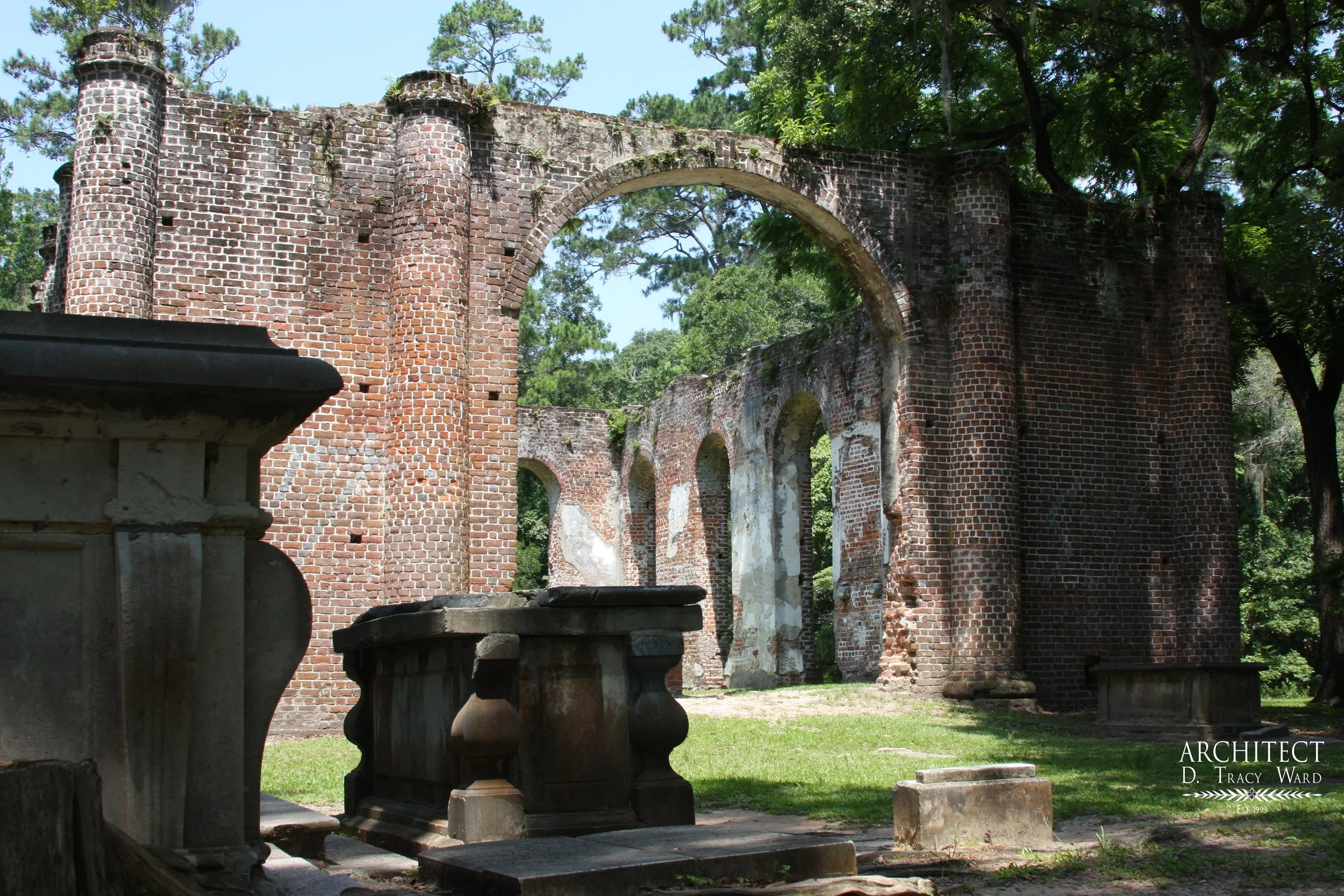
Image courtesy D. Tracy Ward – 2009
But today’s (we first visited in 2009) serene and dreamy atmosphere was not always so, and on two occasions in its history the church grounds experienced horrific chaos and destruction. The Declaration of Independence was written and adopted in 1776…more than three decades AFTER Sheldon began construction in 1745 opening its doors in 1755. The Revolutionary War was in full swing, and South Carolina was center stage. The church was being used in 1775 to store thousands of pounds of gunpowder and weapons for the newly independent United States of America. Unfortunately, as a result, the British military force in the Beaufort region found out and destroyed the church in 1779, as well as the adjacent Bull family estate.
Parishioners eventually began to use the church again and restored the temple-form neoclassical structure in the 1820’s. But alas, Sheldon absorbed its second and final blow four decades later during the War Between the States. For many years, it was believed that this destruction came at the hands of General William Tecumseh Sherman’s troops as part of the now famously fierce “March to the Sea” in 1865. However, new historic research has opened the possibility that the architectural elements may have been simply stripped by locals for personal use…and perhaps as needed for mere survival during the difficult days, weeks and years following the Civil War.
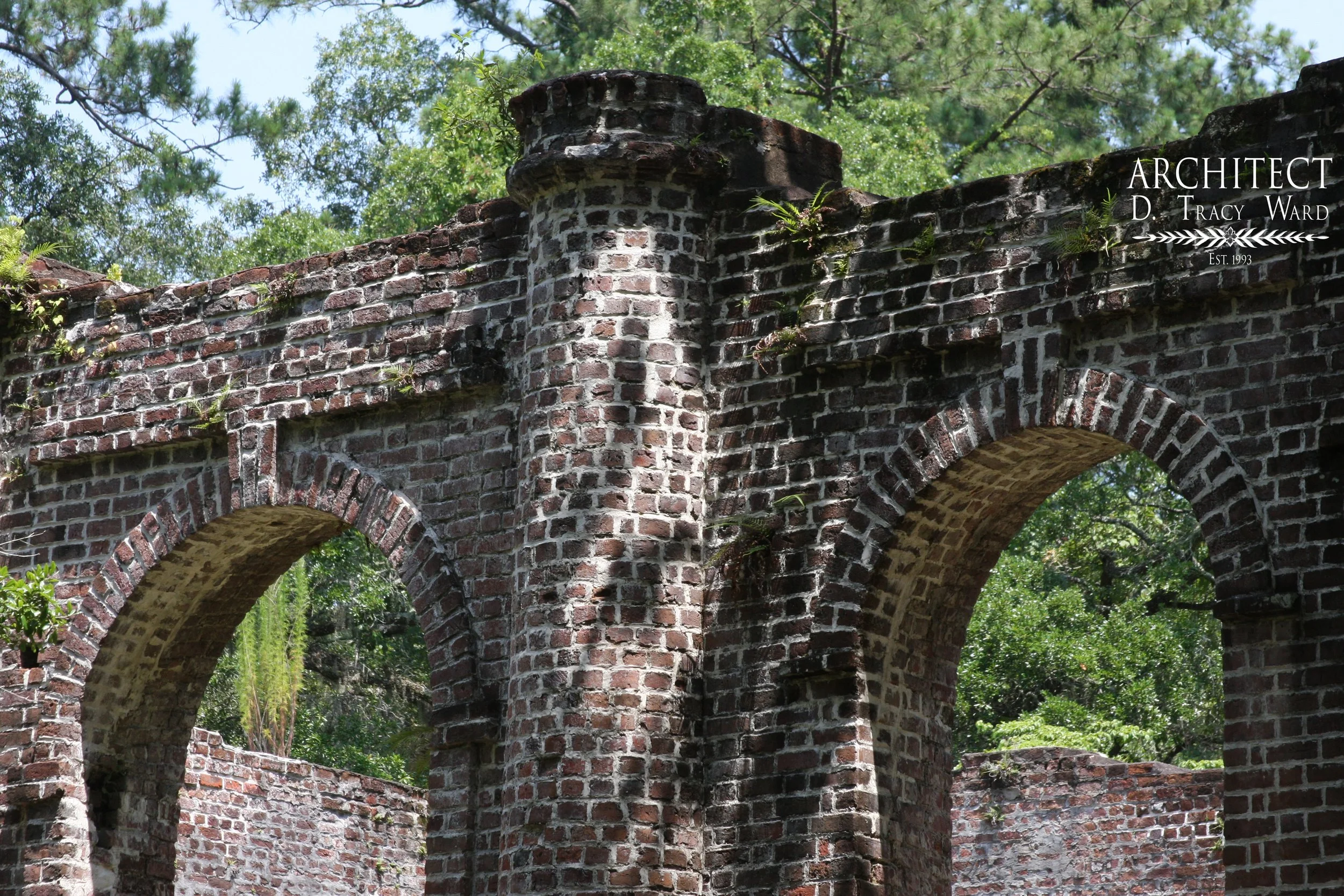
Image courtesy D. Tracy Ward – 2009
Today Prince William Parish is known as Beaufort County, so named named for Henry Somerset, Duke of Beaufort (1684-1714), one of the Lords Proprietors (*) of Carolina. A few other things have changed too since the church congregation held its first services in 1757. Imagine yourself in this place about 260 years ago, as the still visible bricks were being handmade in a New World. These lonely colonists were months of travel away from their familiar homes, friends and families in Europe. And somehow, while the original architectural skin is gone, the classical shape and massing remains elegant in the hand-moulded brick columns and roman arches that endure the ages.
In fact, the setting is perhaps even more romantic and picturesque today – a claim substantiated by its regular and popular use currently as a venue for weddings. Therefore how appropriate it is to upload this article on February 14th:
HAPPY VALENTINES DAY 2018 !!! ♥♥♥
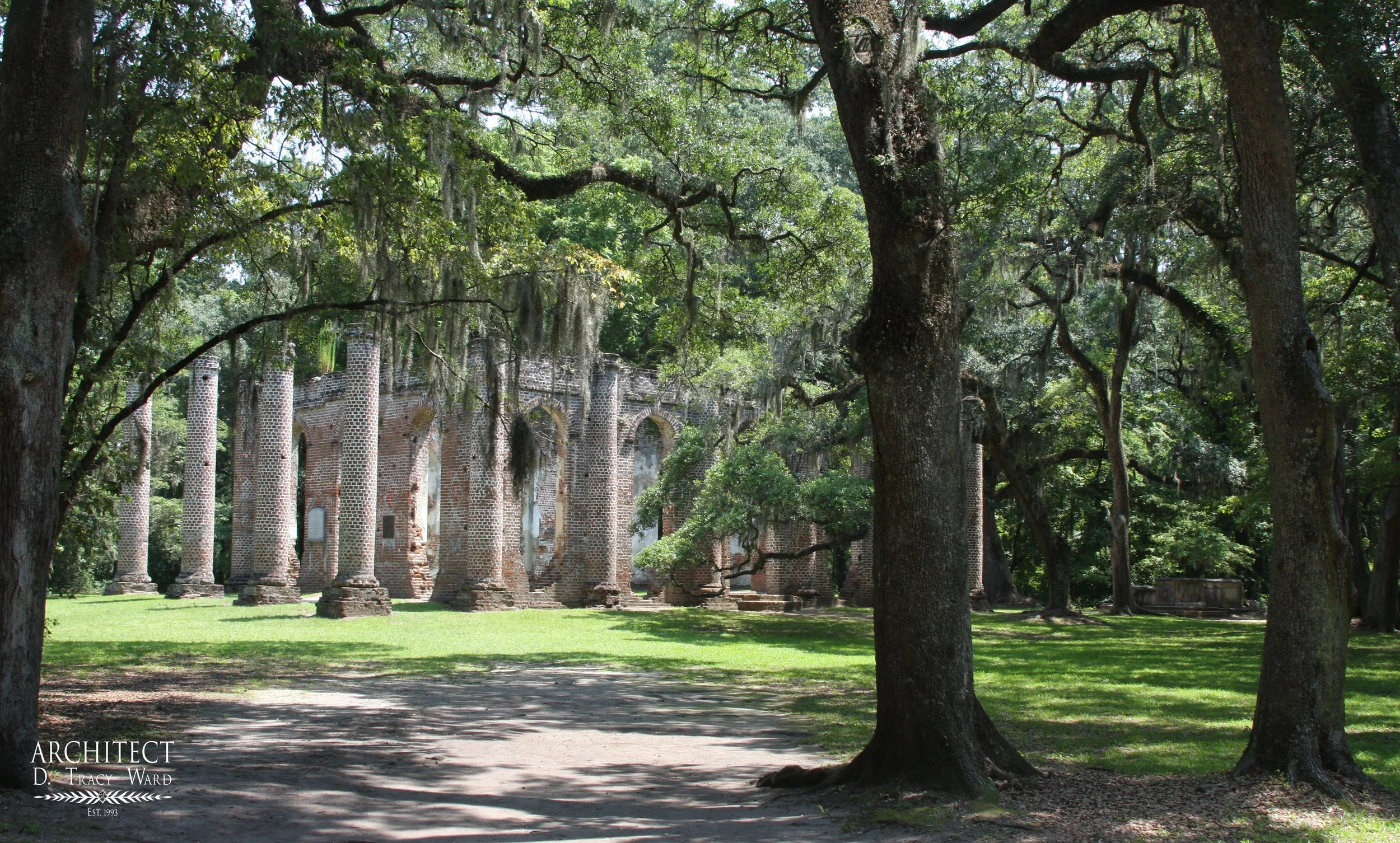
Image courtesy D. Tracy Ward – 2009
(*) The LordsProprietors were the eight Englishmen to whom King Charles II granted, by the Carolina charters of 1663 and 1665, the joint ownership of a tract of land in the New World called Carolina. All of these men either had remained loyal to the Crown or had aided Charles’s restoration to the English throne. (https://www.ncpedia.org/lords-proprietors)
D. Tracy Ward, Architect
Originally prepared 2013 – Reedited & Uploaded February 2018 – DTW’s Blog #0011
Our Original Posts, including images when applicable, are copyrighted © 1993-2018 by D. Tracy Ward and Benchmark Design, PC. God bless America! Treasure Liberty always and pass it on! President Herbert Hoover, October 18, 1931: “This great complex, which we call American life, is builded and can alone survive upon the translation into individual action of that fundamental philosophy announced by the Savior nineteen centuries ago…” (read Mark 12:30-31)