World’s First to Sport a Dome
The Seven Wonders of the Ancient World refers to extraordinary man-made structures of classical antiquity as listed in books of the 1st and 2nd centuries BC. Of the original Seven Wonders, only one (the Great Pyramid of Giza, the oldest of the ancient wonders) remains standing. The label of “Eighth Wonder” is often applied to multiple examples…implying a structure is in the same ultimate extraordinary class and large-scale stature of the first seven.
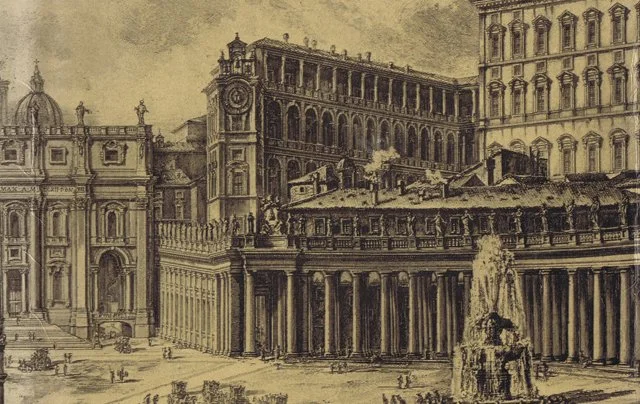
Cover art from the 19th edition in 1987- A HISTORY OF ARCHITECTURE
Perhaps the greatest sporting facility of the ancient world is the Roman Coliseum (Flavian Amphitheatre), which surprisingly is believed to have incorporated a huge fabric curtain/awning/covering to shield its occupants from the blazing Italian sun. The 2000-year-old elliptical shaped Coliseum seated an impressive 55,000 spectators and still stands today, albeit in ruins. Remarkably, this fantastic edifice is NOT regularly considered as a Wonder of the World.
Which leads us to the question – is there a still-standing, man-made structure that could be worthy of such classification? What else might be considered the 8th…Wonder of the World? I personally can think of a few large stone and colored glass European cathedrals that are so awe-inspiring and wonderful, they should be considered for such a list (What is ‘GOTHIC’. . .).
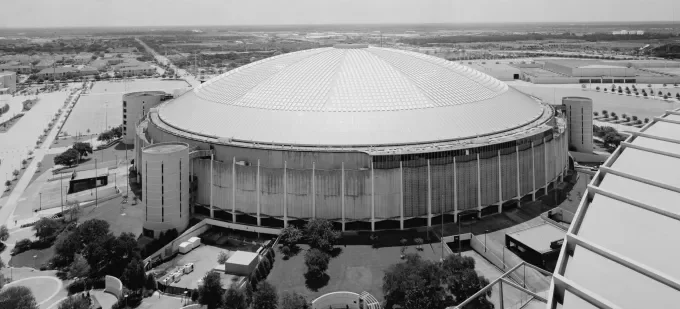
2004 photograph – courtesy Library of Congress
One of the elements that helps garner a label of “wonder” seems to be the overwhelming scale of a structure. The Astrodome in Houston, Texas fits that requirement. The unique structure was marketed as the Eighth Wonder of the World when it opened in the early 1960’s because of its gigantic interior space.
The Astrodome is a modern derivative of the classical Coliseum of antiquity, and it is also the world’s first multi-purpose, air-conditioned sports stadium enclosed by a dome. Built between 1962 and 1965, the Astrodome seats (depending on the sporting event) between 45,000 and 62,000 spectators. In stark contrast, the Roman Coliseum has been standing for 2,000+ years while the Houston Astrodome has barely survived a mere 50+ years. Yet it is already threatened with demolition and redevelopment. So, other than its size, what makes this massive building deserving of “historic” status or any special recognition at all?
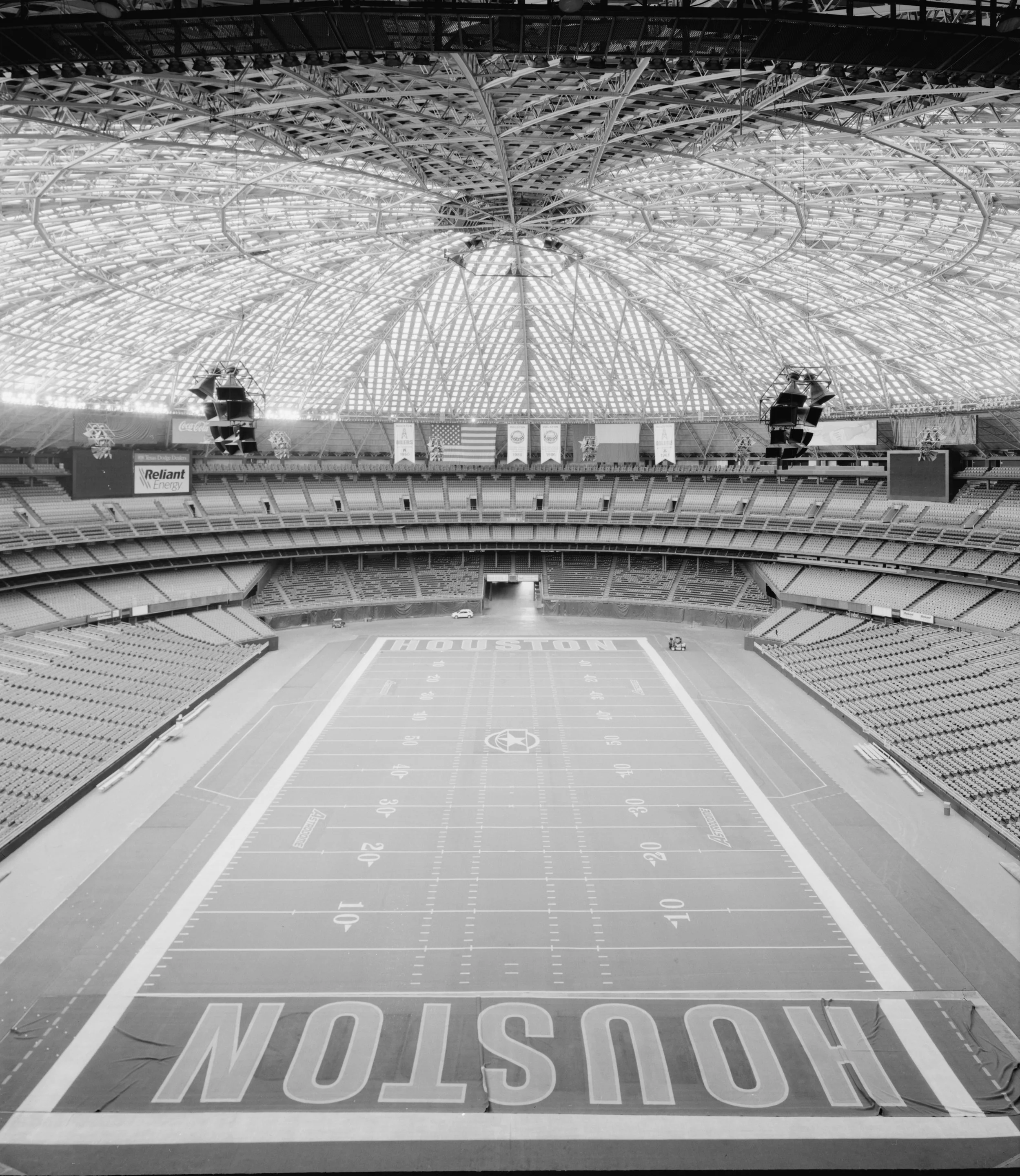
2004 photograph – courtesy Library of Congress
The Astrodome features many elements and aspects that are not just impressive, but ground-breaking innovations – it was a “first” in several ways, which makes it extraordinary in the architectural world.
Astro-turf is probably the best-known invention of the massive structure, a necessity created by its permanent roof which eliminated the sunlight and rain required for natural grass. Even today, we all use that term, “astro-turf” to describe faux grass used widely now on fields all across the U.S. Oddly enough however, the first year of sporting events inside the Astrodome attempted to utilize real, natural grass and during most of the 1965 season, the Astros played on green-painted dirt and dead grass!
Another “first” was the facility’s giant scoreboard four stories high and composed of thousands of light bulbs – and you guessed it…called the Astro-lite.
It was the first time that a stadium was built for both baseball and football that was totally enclosed and fully air-conditioned.
The building covers 9.14 acres of land. Circular in shape, the outer diameter of the Astrodome is 710′ and the clear span of the dome roof is 642′.
We Americans are quickly forgetful and so unappreciative of our unique wealth of comfort and entertainment choices. We are eager to create the next big thing, and anything “tired and old” is simply viewed as a hindrance to “progress”. As an Architect and historian, I am keenly aware of society’s tendency to always promote “new” at any cost. But some are certainly worth keeping. Historic structures teach us about our forefathers and are a tangible link to our important past, especially if in this case the opportunity exists to alter the structure to modern uses and safety standards. Threatened with demolition, local citizens have been successful in efforts to add the building to the National Register of Historic Places in January of 2014.
Today the iconic Astrodome quietly sits awaiting its fate. It is believed to be structurally sound, but local citizens rejected in 2013 a $217 million renovation to repurpose it into a convention center. A huge and innovative structure designed and constructed during the turbulent 1960’s – a time of civil rights struggles, NASA space travels, the Cuban missile crisis, and British Beatle mania.
Has this incredible creation maxed out its life span after only half a century?
Let’s hope not.
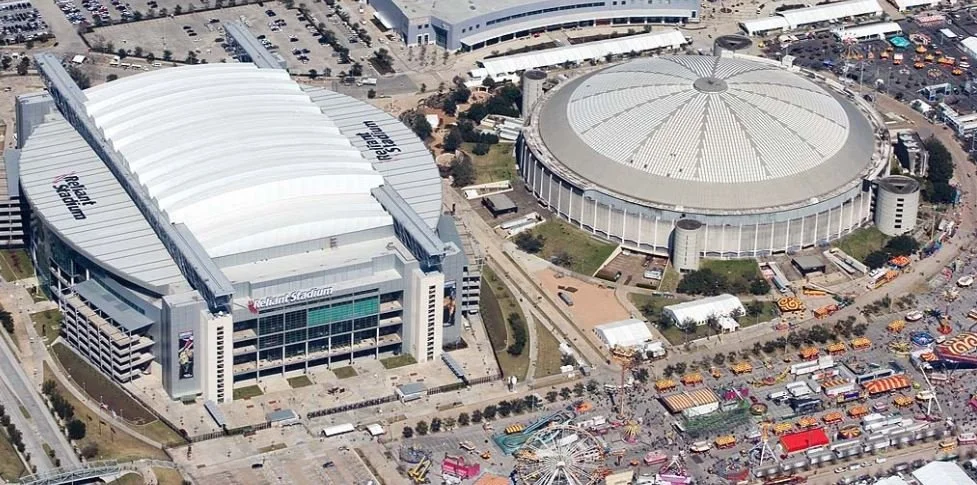
Bing image search – The Astrodome adjacent to the new Reliant Stadium built 2002.
Resources:
D. Tracy Ward, Architect
Originally prepared 2014. Edited and uploaded May 2018 – DTW’s Blog #0019
Our Original Posts, including images when applicable, are copyrighted © 1993-2018 by D. Tracy Ward and Benchmark Design, PC. God bless America! Treasure Liberty always and pass it on! “Architecture aims at Eternity. Architecture has its political Use; publick Buildings being the Ornament of a Country; it establishes a Nation, draws People and Commerce; makes the People love their native Country, which Passion is the Original of all great Actions in a Common-wealth.” [CHRISTOPHER WREN, Parentalia]