Every Architect’s Bible

A visit to antiquity in 2006 – Dakota, Noah, Alexa, Natalee at Stonehenge built ca. 2,500 BC
In my relentless efforts to encourage our four kids to read and explore history, I’ve often shared this character trait of the Creator God – God the Father obviously puts great importance upon reading and history because HE provided HIS Basic Information Before Leaving Earth (the Holy Bible) in the form of a “history book”!
Admittedly, it didn’t always work with the four above, ha!
But similarly, well-prepared and self-studious architects require their own reference book of information, a Bible you might say. Specifically an in-depth account of the history of the world’s architecture. In the Foreword of the 1896 edition of “A History of Architecture on The Comparative Method – For The Student, Craftsman, and Amateur” are printed these thoughts from the English poet William Wordsworth (1770-1850):
“The spirit of antiquity, – enshrined
In sumptuous buildings, vocal in sweet song,
In picture speaking with heroic tongue.
And with devout solemnities entwined –
Strikes to the seat of grace within the mind:
Hence forms that glide with swan-like ease along,
Hence motions, even amid the vulgar throng,
To an harmonious decency confined.
As if the streets were consecrated ground,
The city one vast temple, – dedicate
To mutual respect in thought and deed.”
Wordsworth’s descriptive words are indeed visual yet also appealing to all our human senses – “spirit of antiquity”, “sumptuous”, “heroic”, “forms that glide”, “harmonious”, “temple”, “respect”.
As part of the collection of Fine Arts developed for aesthetics or beauty (painting, sculpture, architecture, music, and poetry), architecture and its practice and art thereof, is primarily a visual effort. Images, styles, colors, materials, spaces, shapes and massing, relative scale and proportion, etc. – these are the tools of the trade. The process ultimately blends man-made structures with God’s nature (earth, sunlight, shadows, weather) to enhance the comfort and productivity of human interaction and livelihood.
Every Architect has resources available to continue his/her personal evolution of knowledge and understanding of the inherent challenges of this practice. But one book has been, and continues to be, the leader for reference information regarding the history and evolution of ARCHITECTURE.
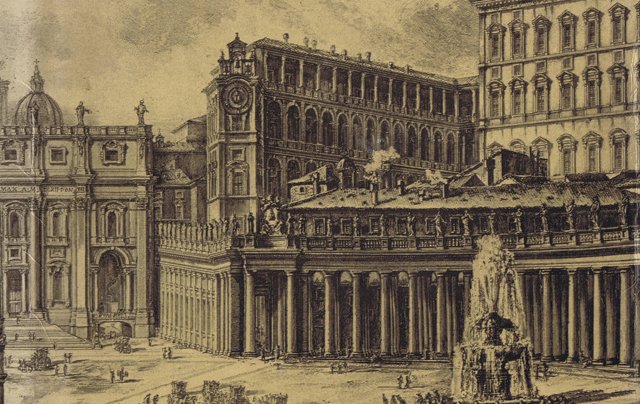
Cover art from the 19th edition in 1987- A HISTORY OF ARCHITECTURE
Co-authored by Sir Banister Flight Fletcher(an English architect and architectural historian, 1866-1953) and his father – the standard textbook “A History of Architecture” is a valued piece of personal libraries around the world, especially those of architects, builders and various designers. The AIA (American Institute of Architects) declared the 1996, 20th edition as the “Book of the Century” in 2000, and it continues to be the definitive reference resource describing and illustrating the world’s architecture from the earliest times through the late 1900’s. This extraordinary reference book traces the history of architecture from Prehistoric to the International Style, as well as the social and cultural characteristics of the various periods.
According to Sir Bannister Fletcher – “ARCHITECTURE … provides a key to the habits, thoughts and aspirations of the people, and without a knowledge of this art the history of any period lacks that human interest with which it should be invested.”
My family possesses both the 18th edition of 1975 as well as the 19th edition of 1987. It is this 1987 version that holds special recognition for myself and my wife Kimberly. Our book literally embraces a loose signature page from 1985 when the original hand drawn renderings were being created in London at the Bartlett School of Architecture (“The Bartlett”). The original note is scanned below:

An American Professor in London (wasn’t that a 1980’s horror movie?) at the time, Mark Gelernter, was one of our tutors while my wife (we had just been married weeks earlier) and I attended the Bartlett School in London during fall of 1985 along with about 7 other students from the School of Architecture at Mississippi State University. We were greatly impressed with the beautiful drawings that Gelernter was handcrafting, so we anxiously awaited the new edition knowing we had witnessed its creation firsthand. Thirty years later. . . Mark Gelernter is now the Dean of the School of Architecture of the University of Colorado Denver, and a colleague & supporter of the Institute of Classical Architecture & Art – an extraordinary new affiliation at both UCD and MSU.
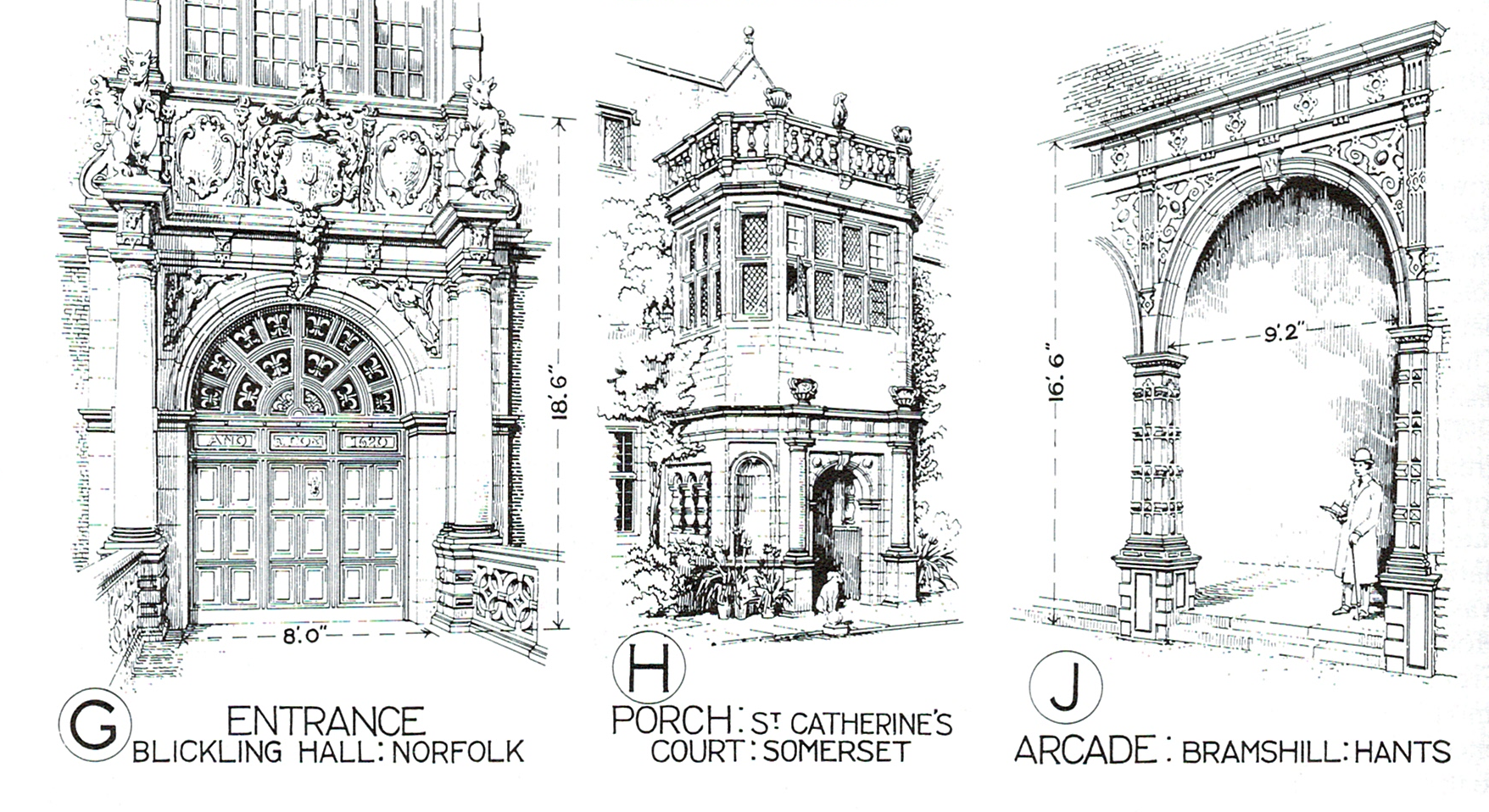
Beautiful sketches – partial page 1012 from 19th edition in 1987- A HISTORY OF ARCHITECTURE
Speaking of Bibles and books of history, I find it enormously fascinating how God orchestrates our life’s experiences. And sometimes HE waits 30+ years to expand upon an almost forgotten, but very influential, relationship that began 4,200 miles away from home. But what is 30 short years, when considering the unlimited element of time in eternity?
UPDATE: As of this posting, Dr. Mark Gelernter is now retired in Montana with his wife, and we wish him well and Godspeed!
Website references:
http://www.ucdenver.edu/Academics/Colleges/ArchitecturePlanning/Pages/default.aspx
http://www.amazon.co.uk/Banister-Fletchers-A-History-Architecture/dp/0750622679
D. Tracy Ward, Architect
Originally prepared 2013 – Reedited & Uploaded April 2018 – DTW’s Blog #0016
Our Original Posts, including images when applicable, are copyrighted © 1993-2018 by D. Tracy Ward and Benchmark Design, PC. God bless America! Treasure Liberty always and pass it on! “Architecture aims at Eternity. Architecture has its political Use; publick Buildings being the Ornament of a Country; it establishes a Nation, draws People and Commerce; makes the People love their native Country, which Passion is the Original of all great Actions in a Common-wealth.” [CHRISTOPHER WREN, Parentalia]