The World’s Largest…at Ole Miss
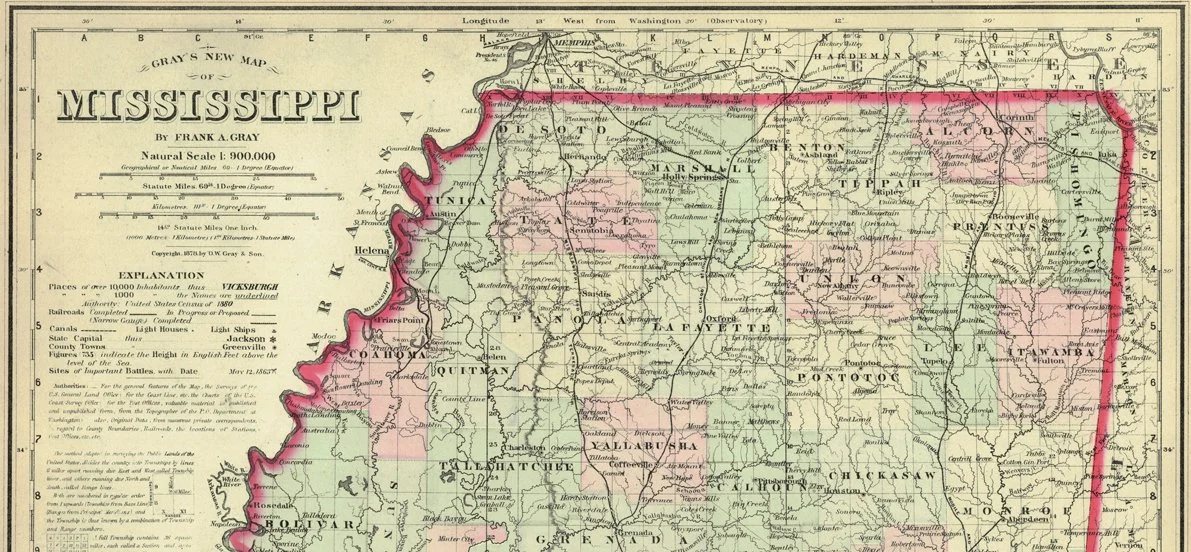
1878 State of Mississippi map – cropped focus on Lafayette County & Oxford – owned by this author
A little more than a decade before the War between the States, the country was quickly expanding with public education a top priority. In the midst of this growing social and political unrest, The University of Mississippi (aka “Ole Miss”) in Oxford was chartered on February 24, 1844 and opened to just 80 students in 1848. Englishman and Architect Mr. William Nichols (Forgotten Architect of the Old South) had recently completed the design for the town of Tuscaloosa and the early campus plan for the University of Alabama around 1830. In 1836, Nichols became the State Architect for Mississippi and proceeded to design the new campus and primary buildings for the University of Mississippi.
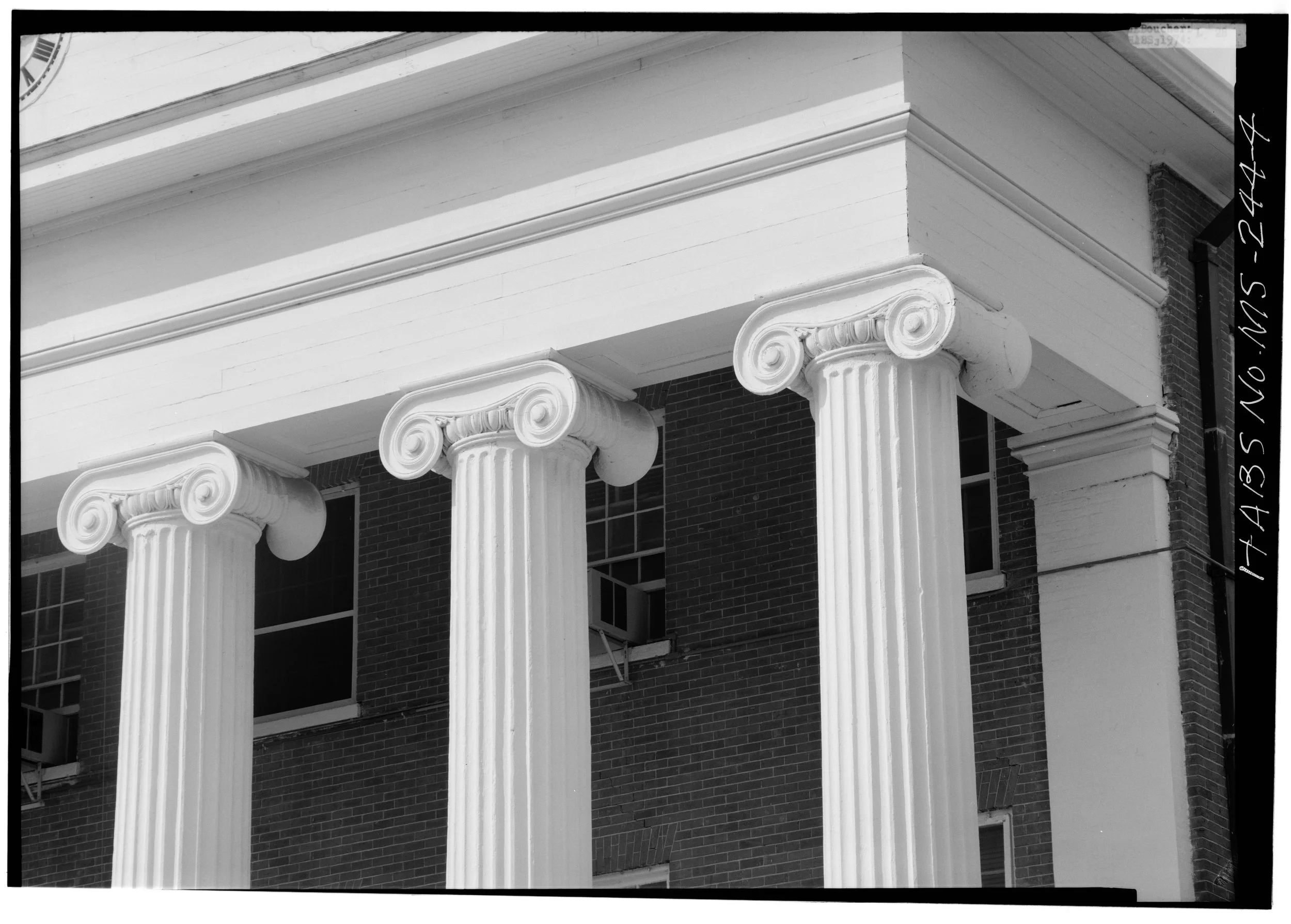
Image courtesy HABS Library of Congress – built 1848 – designed by Nichols
In that opening year of 1848, Attorney and EngineerMr. John Millington, yet another English immigrant, arrived to teach natural sciences “bringing with him a collection of scientific apparatus he had acquired during forty years of teaching natural philosophy, mechanics, and astronomy in England and the United States”. As a world-renowned scientist and one of the four original faculty members on the UM campus, Millington had hoped the new university could become one of the best in the country. However this author cannot explain exactly, but it appears Millington transferred his focus to a medical college in Memphis in the 1850’s, never completing his vision for UM.
Instead, Frederick A.P. Barnard brought his expertise to the fledgling Ole Miss faculty in 1854 to serve as professor of mathematics, civil engineering, and astronomy. Like the Architect William Nichols, Barnard previously served a similar position at the University of Alabama. Soon after his arrival, he applied state funding toward the construction of an astronomical observatory (the present-day Barnard Observatory) and the acquisition of the finest scientific instruments available at the time. Many of those technical pieces were fabricated by the prestigious Paris instrument makers Lerebours et Secretan. In 1859, Mr. Barnard commissioned construction of an observatory lens that would surpass the 15-inch lenses at the Harvard College Observatory and the Pulkova Observatory in Russia. Lens maker Alvin Clark of Cambridge, Massachusetts, crafted the 18-1/2-inch glass, which was made in Birmingham, England.
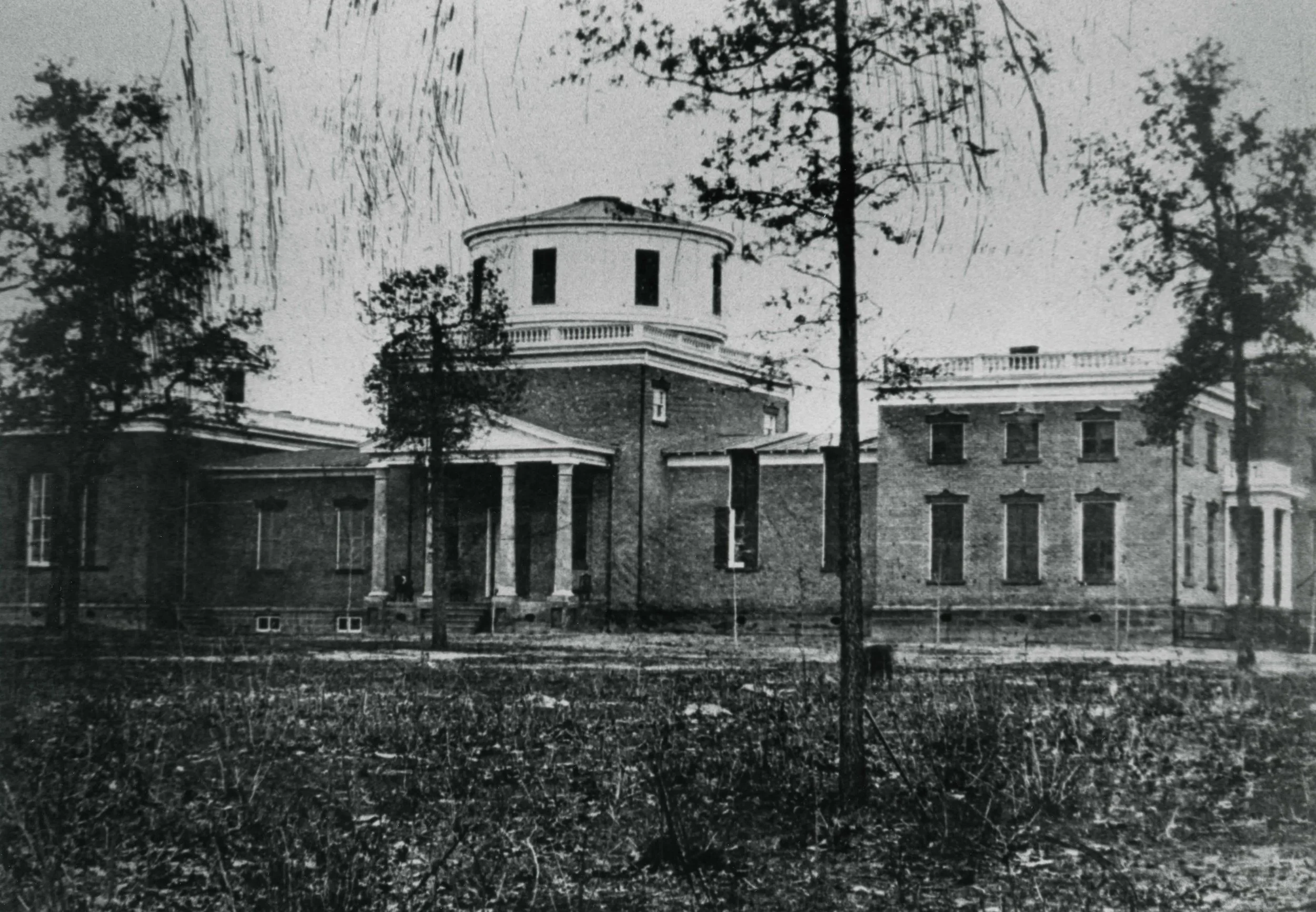
Barnard Observatory – Image courtesy National Archives Catalog – photo ca. 1859
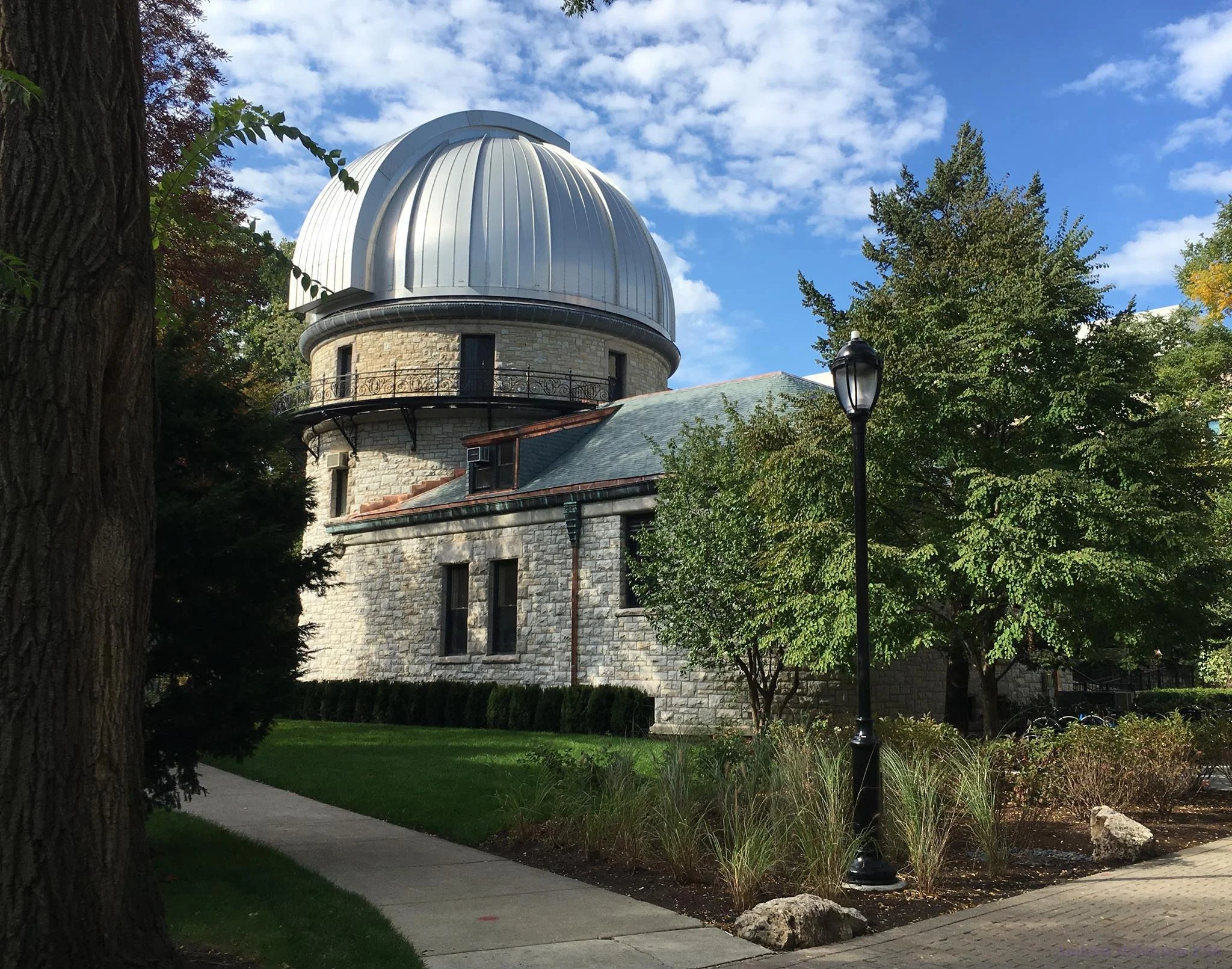
But with the Civil War in its full phases of danger and devastation, transport of the lens from Massachusetts, where it was made, to Mississippi became nearly impossible. Therefore, Mississippi’s agreement fell through, and the lens (the largest in the world), never arrived on the campus for which it was made. Instead, the Chicago Astronomical Society acquired the telescope lens from Mr. Clark, for $18,187, and began building an observatory for it in 1863. Oddly, the original (Old) University of Chicago went bankrupt in 1887 and the telescope was moved to Northwestern University, where it resides today in Evanston, Illinois. In 1997, the Dearborn Observatory at Evanston realigned a connection with the state of Mississippi that began 138 years earlier. A new aluminum dome was installed, fabricated by Observa-DOME Laboratories of Jackson, Mississippi.
After the Civil War, the University of Mississippi’s Barnard Observatory was used as classrooms and laboratories. But by the 1870s, Millington and Barnard’s scientific instruments became obsolete and were moved to permanent storage to preserve their historic character. The original building was named to the National Historic Register in 1978.
Ole Miss just barely missed having a world record on its campus. Today the building houses the Center for the Study of Southern Culture ( http://southernstudies.olemiss.edu/).
References:
“The Architecture of William Nichols: Building the Antebellum South in North Carolina, Alabama and Mississippi” by Paul Hardin Kapp, with Todd Sanders; University Press of Mississippi
https://southernstudies.olemiss.edu/about/barnard-observatory/
https://www.lib.uchicago.edu/e/scrc/findingaids/view.php?eadid=ICU.SPCL.OLDUOFC
http://www.loc.gov/collections/historic-american-buildings-landscapes-and-engineering-records/
D. Tracy Ward, Architect
Originally prepared 2012 – Reedited & Uploaded February 2018 – DTW’s Blog #0009
Our Original Posts, including images when applicable, are copyrighted © 1993-2018 by D. Tracy Ward and Benchmark Design, PC. God bless America! Treasure Liberty always and pass it on! President Herbert Hoover, October 18, 1931: “This great complex, which we call American life, is builded and can alone survive upon the translation into individual action of that fundamental philosophy announced by the Savior nineteen centuries ago…” (read Mark 12:30-31)