The Boston “molassecre” of 1919
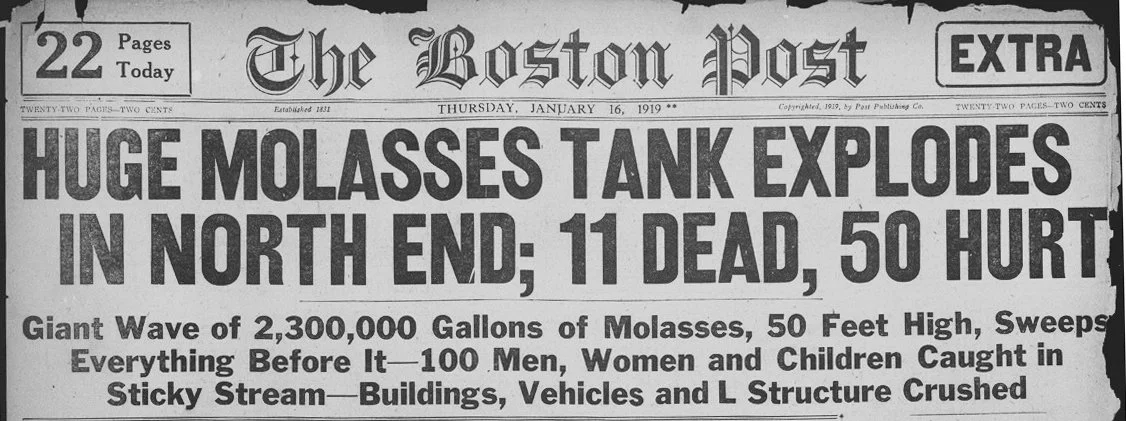
Boston Post, Public Domain, Wikimedia Commons
“. . .a vicious, suffocating, brown death.”
The Boston “Massacre”, as you know the story, was the killing of five colonists by British regulars on March 5, 1770. It was the culmination of tensions in the American colonies that had been mounting since Royal British troops first appeared in Massachusetts in October 1768 to enforce the heavy tax burden imposed by the Townshend Acts.
But this “molasses massacre” is another story…a different, but still deadly, incident in Boston… this one was almost 150 years later. It took months to clean up the syrupy residual mess. And for many years afterward, the sweet smell of molasses lingered in the air and remained embedded in the nooks and crannies of the North End streetscape. One writer described the scene:
“…the explosion flattened people, horses and buildings with a huge shockwave. As some tried to get to their feet, the sudden vacuum where the tank once was created a reverse shockwave, sucking air in and knocking people, animals and vehicles around once more, and shaking homes off their foundations. 2.5 million gallons of thick, heavy, odorous molasses formed a sticky tsunami that started at 25 or 30 feet high and coursed through the streets at 35 mph. Victims couldn’t outrun it. It knocked them into buildings and other obstacles, it swept them off their feet, and it pulled them under to drown in a viscous, suffocating, brown death.”
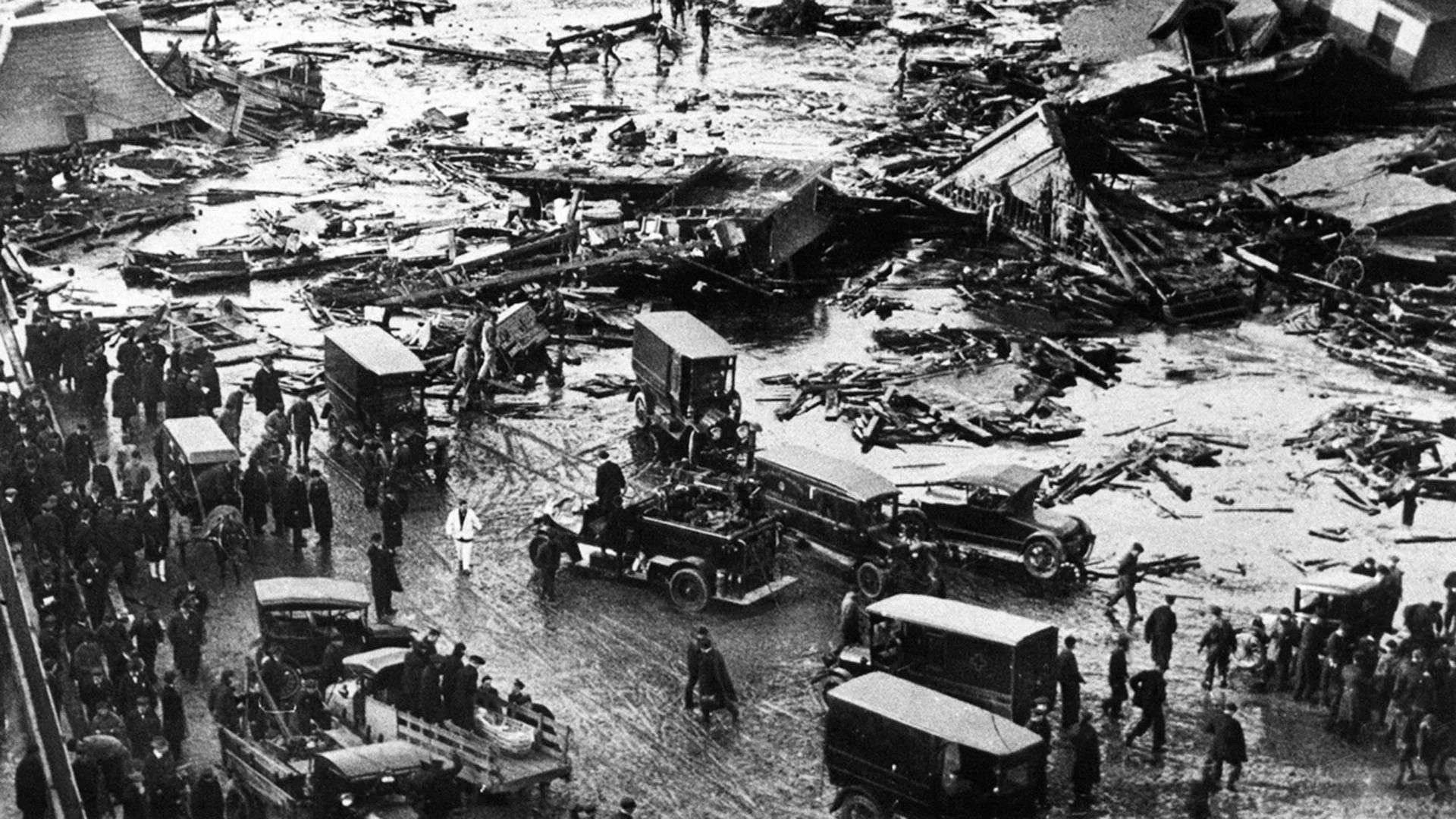
Image generally available via multiple internet sources
The Purity Distilling Company had constructed a huge iron tank, four years prior to the incident, below an elevated steel railway to hold about 2.5 million gallons of molasses. The bulky molasses was used by American consumers as sweetener of course, but also distilled into alcohol for industrial uses.
The barrel shaped tank was about 50 feet high and about 90 feet in diameter, apparently filled to the brim on an unusually warm winter day. Workers and residents had been complaining for years that the huge riveted monster was constantly leaking, so the owner kept it painted brown to hide the leaks. As the story goes, about midday on January 15, 1919, the huge tank didn’t just quietly and slowly give way to the heavy, thick, sticky and gooey mass….the tank apparently blew up…it actually exploded! Metal shrapnel flew 200 feet away, and one large piece of the tank’s side knocked out the support for the elevated train tracks above.
The collateral structural damage, and the molasses flood itself, killed 21 people and injured 150 in the waterfront working-class North End part of Boston. No one knows exactly what caused the tank to fail. Was it anarchists of post World War I, or a structural failure, or just shoddy construction, or a company pushing its limits of production? Regardless, the company eventually paid out about $1 million in claims dragging into 1925.
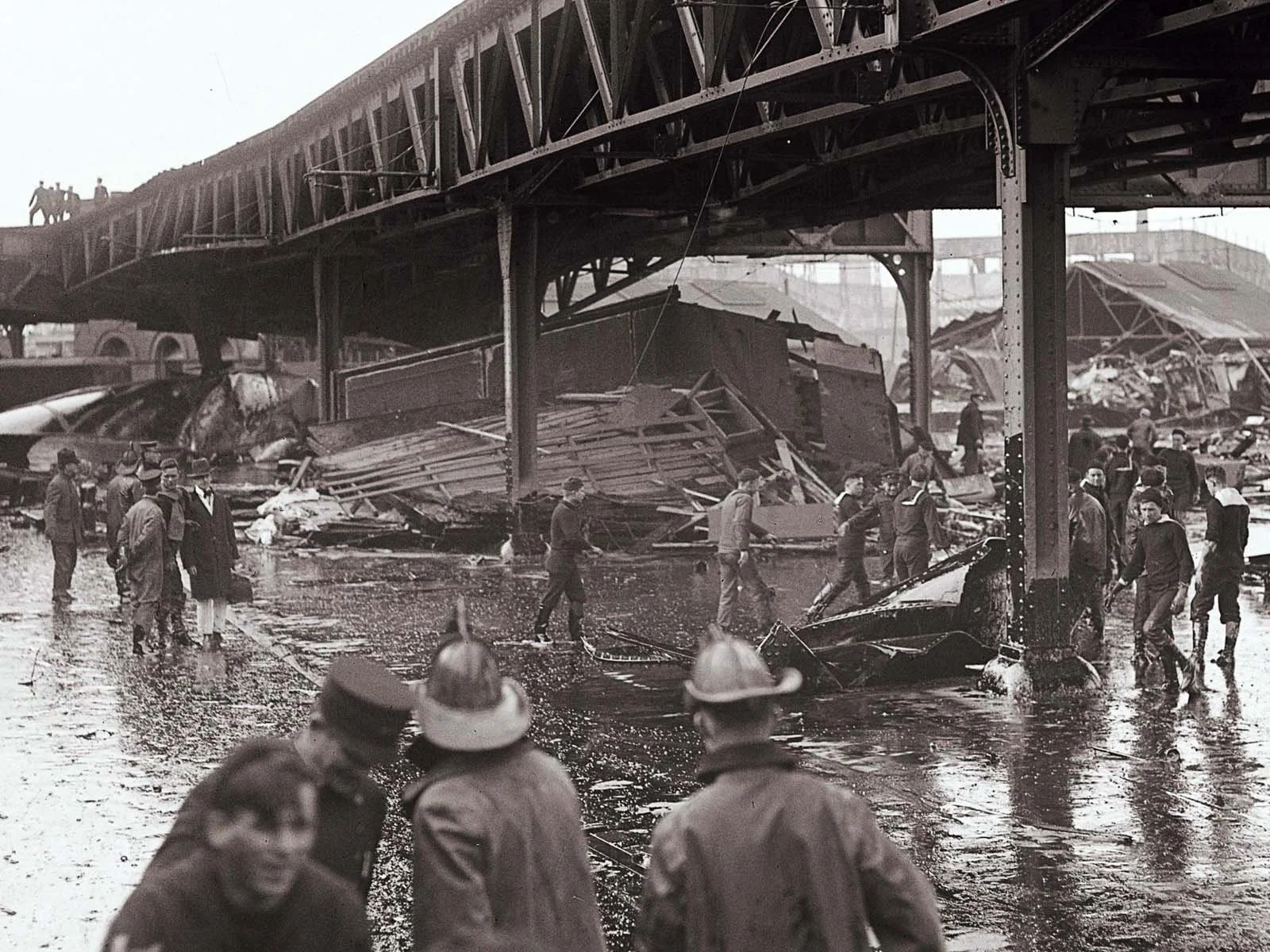
Image generally available via multiple internet sources
There are several books on this subject that delve into the fascinating details. One such manuscript review is as follows:
“So this steel reservoir contained on the day of the accident a weight of molasses equal to 130 hundred-ton locomotive engines…or thirteen thousand Ford automobiles.” History, mystery, and courtroom drama, with the singularly bizarre circumstance of, as my goodreads.com friend, Newengland so well phrased it, “death by molasses.” Oh yeah, and along with a major disaster, there’s a World War, the Great Influenza Pandemic, the onset of prohibition, and bunches of bomb throwing anarchists all rolled into the mix. Much more than a disaster story.… (Review Dec 2012 · by George E. Dawson); “Dark Tide: The Great Boston Molasses Flood of 1919”; Author:Stephen Puleo; First published: Sep 02, 2003
In the annals of architectural history, the events of that January day of 1919 in Boston, Massachusetts surely must register at the top of a list of most bizarre accidents of the industrial age.
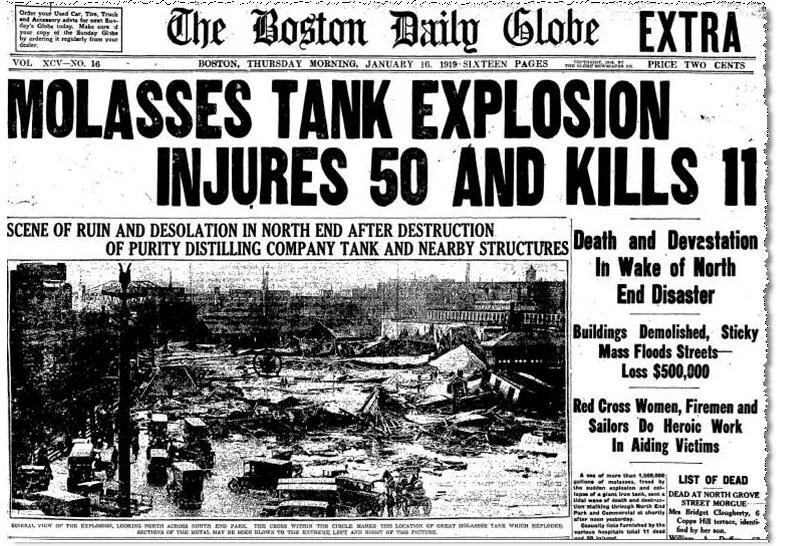
Image generally available via multiple internet sources
D. Tracy Ward, Architect
Originally prepared 2013 – Reedited & Uploaded January 2018 – DTW’s Blog #0003
Our Original Posts, including images when applicable, are copyrighted © 1993-2018 by D. Tracy Ward and Benchmark Design, PC. God bless America! Treasure Liberty always and pass it on! President Herbert Hoover, October 18, 1931: “This great complex, which we call American life, is builded and can alone survive upon the translation into individual action of that fundamental philosophy announced by the Savior nineteen centuries ago…” (read Mark 12:30-31)