Forgotten Architect of the Old South
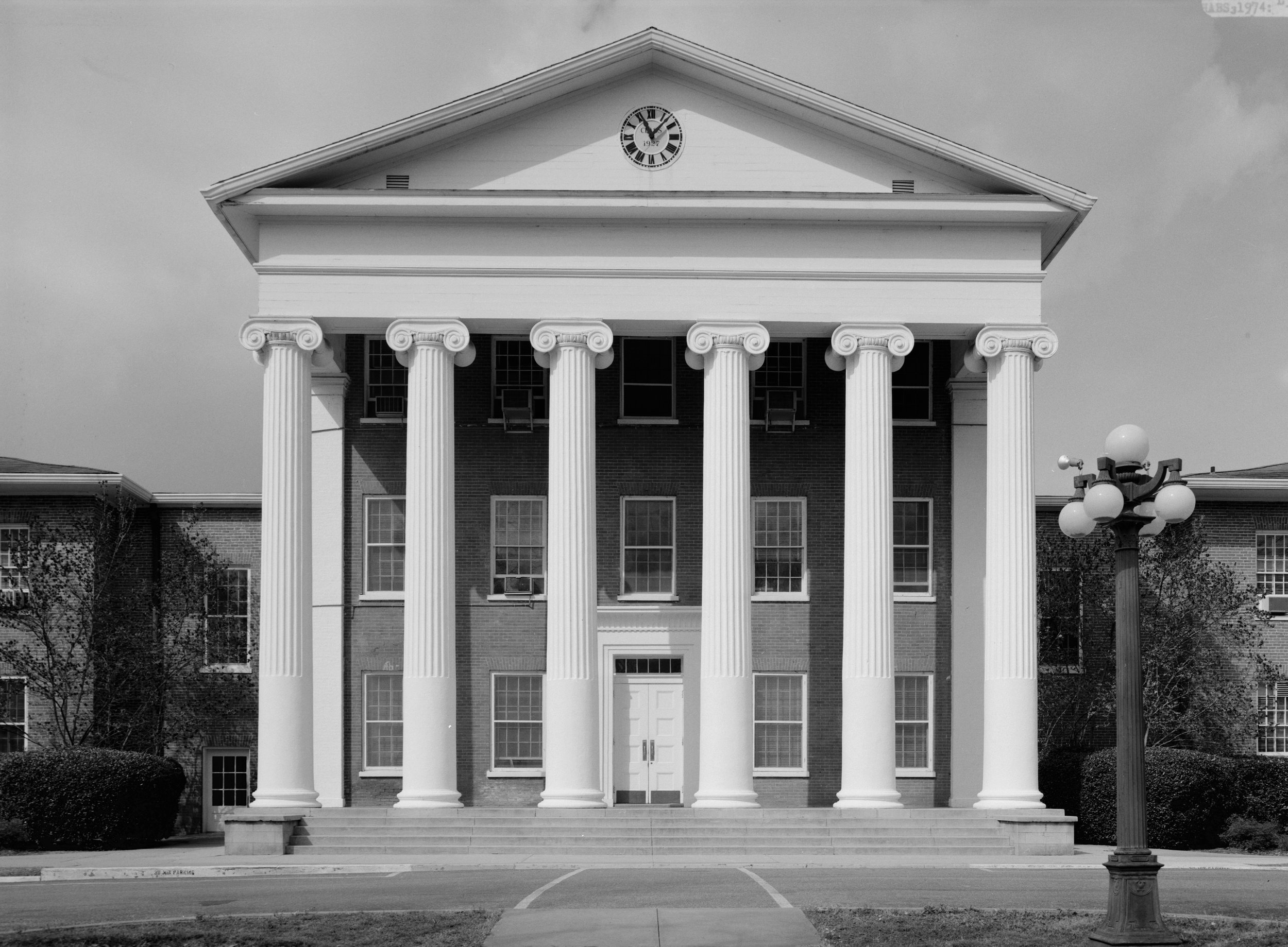
Image courtesy HABS Library of Congress – built 1848
As one studies the historical European settlement of the “Southwest Territory”, one finds a clear and direct connection to those who immigrated southward into the most fertile soils on earth. Most of them traveled from Virginia and North & South Carolinas. In fact, between 1820 and 1840, historians estimate that these three states lost 1.7 million of their population to the new lands down South.
Typically, these pioneers first entered the State of Mississippi somewhere near present-day Meridian and settled all around the State in rich lands with access to navigable rivers. As lands were opened following several Treaties with the native peoples, enormous wealth was being produced in Mississippi and Alabama – joining the Union in 1817 and 1819 respectively. The rapid expansion required architects and builders to manage the growth. And the area played its role in the fast approaching Industrial Revolution that supplied a new world-wide appetite for raw materials such as cotton, rice and sugarcane. With the exceptions of Mobile, Natchez, and New Orleans, the emerging lands were almost completely undeveloped, and architects were given a clean canvas from which to create buildings, bridges and entire towns.
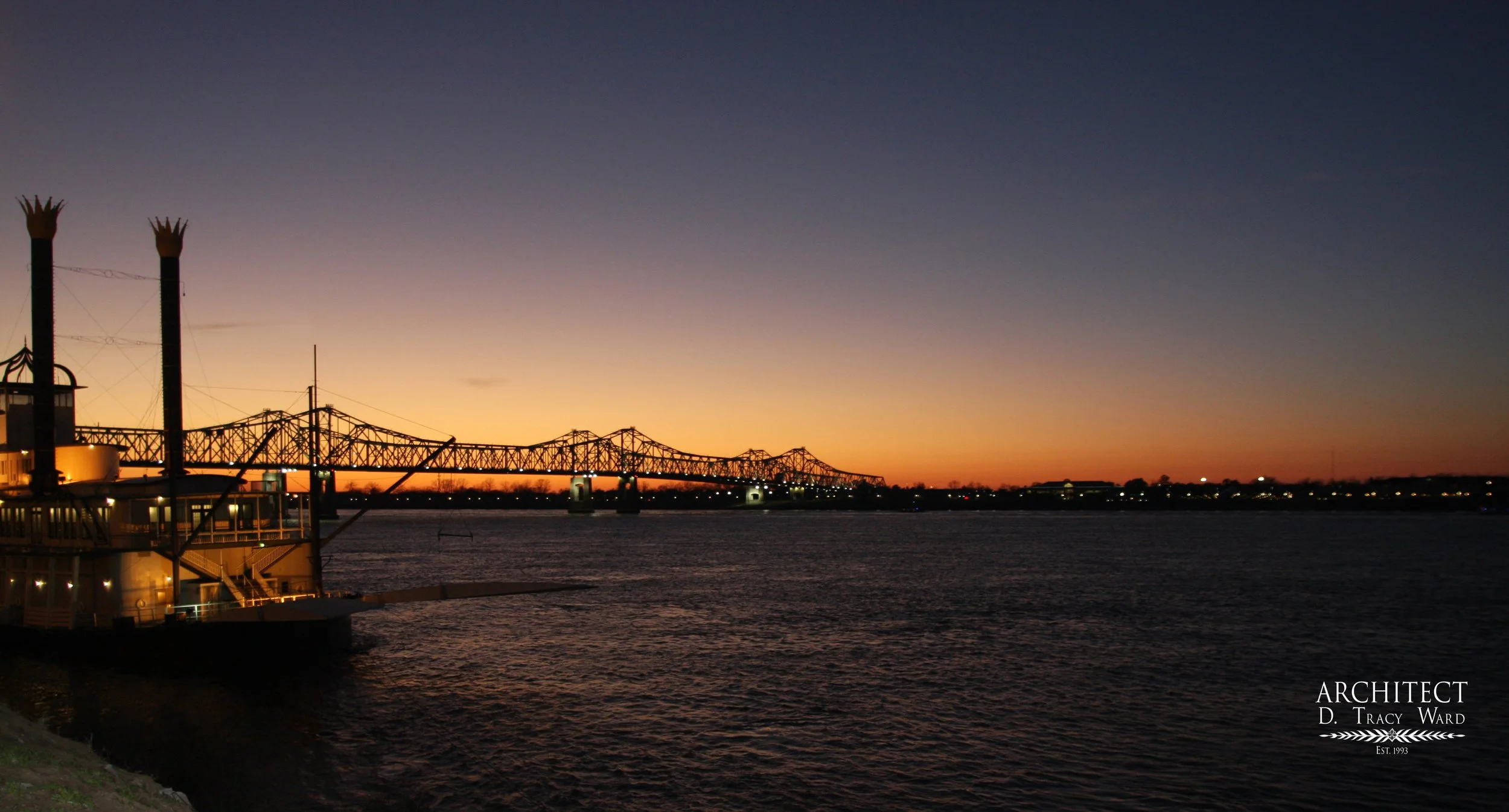
Image Courtesy D. Tracy Ward 2015; the Mississippi River @ Natchez
Mr. William Nichols arrived in the United States at the age of 20 around the year 1800 from Bath, England. He initially developed his career during a span of about 25 years in North Carolina, where he found great success in both private and public commissions. During that time, he performed as State Architect for North Carolina and Superintendent of Public Buildings. By the year 1827, William Nichols had moved, and he spent the next 6 years in Alabama as the State Architect, and then as State Engineer.
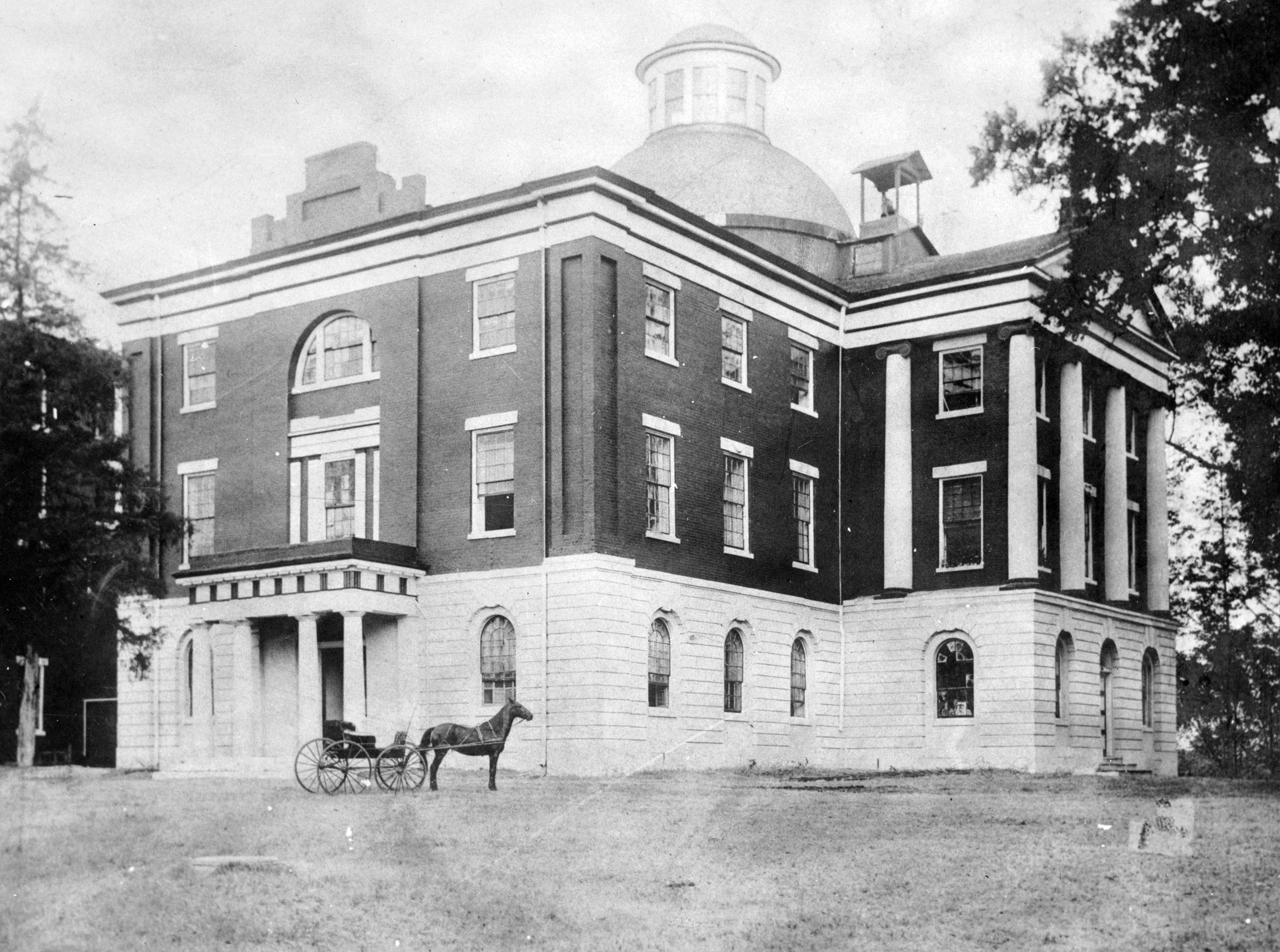
Nichols’ State Capitol in Tuscaloosa, Alabama – burned in the 1920’s – Library of Congress
He performed a remarkable portfolio of work including Tuscaloosa’s town plan as well as the campus plan and buildings for the University of Alabama, and the Alabama State Capitol building (active 1826-1846). In 1833, Nichols and his wife sold their property in Tuscaloosa, and moved from Montgomery to Louisiana. As Assistant State Engineer in Louisiana, Nichols only stayed in New Orleans for about 2 years.
In 1836, his career shifted to Jackson, Mississippi where he ultimately performed again as State Architect – his fourth southern state to serve in that or a similar position. Unfortunately, many of his works during his 17 years in Mississippi have perished over the years, but a few gems remain including The Lyceum in Oxford (image at the top), the Old Capitol in Jackson, and the Governor’s Mansion in Jackson. It can’t be confirmed, but Nichols was at least inspirational to the Madison County courthouse in Canton.
William Nichols bequeathed the Southern States a strong and academically correct architectural foundation. After an impressive five decades of successful architectural practice in the Old South, he died December 12, 1853 at the age of 73, and was buried in Lexington, Mississippi. Indeed, the complete story of American architectural history cannot be fully told without the inclusion of the contributions of this talented Englishman’s role in those fragile early years of the Republic.
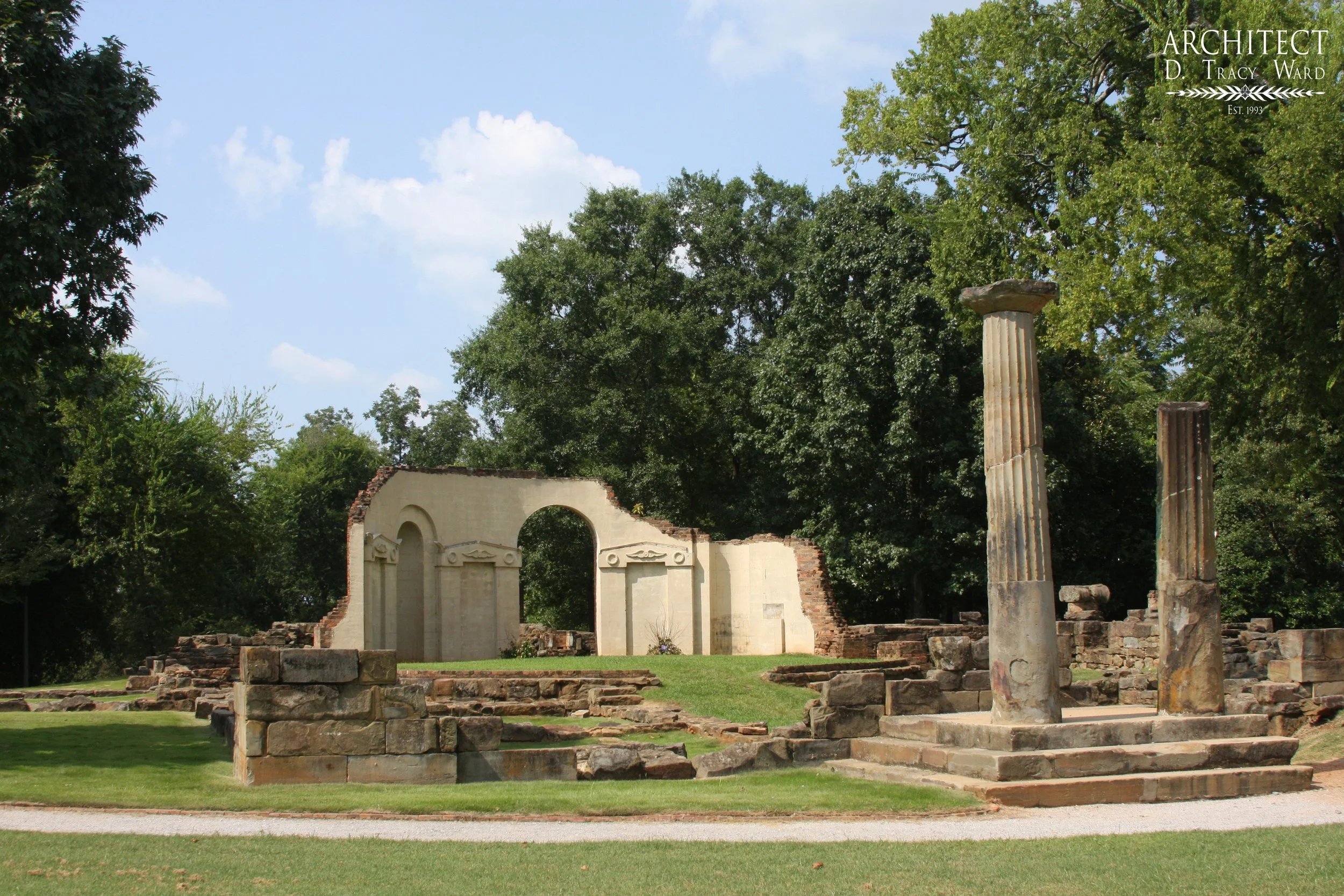
Image Courtesy D. Tracy Ward 2013; Ruins of Nichols’ State Capitol in Tuscaloosa, Alabama
“…a lively, creative, and informed interest in, and practice of, architecture extended to the last year of one of the longest, most productive and least recognized careers in the history of American architecture.” (C. Ford Peatross 1979)
References:
“The Architecture of William Nichols: Building the Antebellum South in North Carolina, Alabama and Mississippi” by Paul Hardin Kapp, with Todd Sanders; University Press of Mississippi
http://www.loc.gov/collections/historic-american-buildings-landscapes-and-engineering-records/
D. Tracy Ward, Architect
Originally prepared 2013 – Reedited & Uploaded January 2018 – DTW’s Blog #0007
Our Original Posts, including images when applicable, are copyrighted © 1993-2018 by D. Tracy Ward and Benchmark Design, PC. God bless America! Treasure Liberty always and pass it on! President Herbert Hoover, October 18, 1931: “This great complex, which we call American life, is builded and can alone survive upon the translation into individual action of that fundamental philosophy announced by the Savior nineteen centuries ago…” (read Mark 12:30-31)